How to water orchids in winter? Master these methods and key points
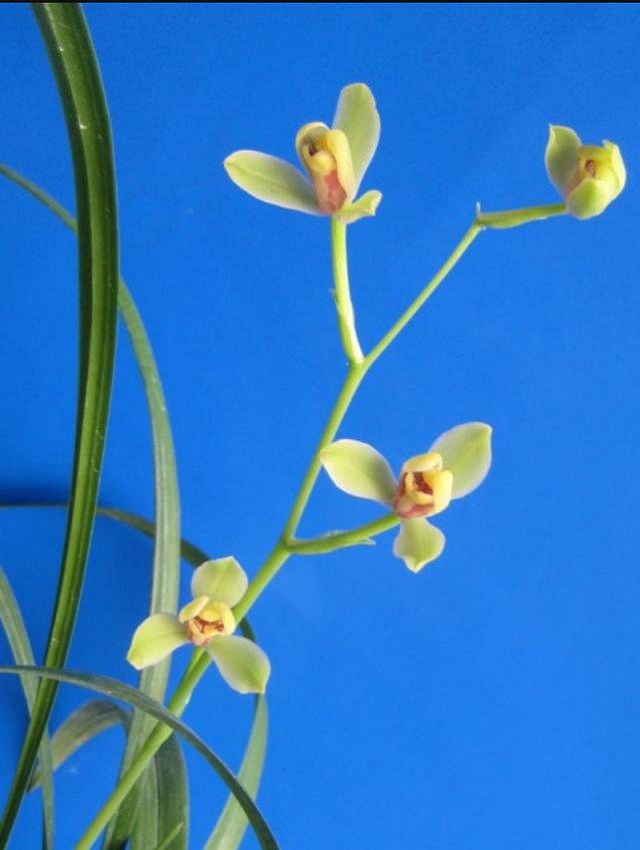
First, you need to know whether orchids need watering in winter. The orchid shed of Haoshe Nongfu cannot be exposed to rain in winter, and the longest watering interval was 60 days. The orchids did not dry up from lack of water.
Of course, how you water in winter depends on your care environment. Temperature and humidity are both key. In the south, orchids are mostly grown in conditions resembling the outdoors, unless it gets especially cold, in which case you insulate them a bit. Orchids in this kind of environment do not need watering, because the temperature determines that the orchid plants use very little water.
If you are indoors in the north, where the temperature can reach above 20, and the ambient humidity is also relatively low, then you need to consider watering. When watering, just follow your usual method. What you need to pay attention to is that ventilation after watering must be good. If you control the temperature, let natural air flow as much as possible.
Watering orchids in winter is different in the south and the north. It must be decided according to your region and the temperature, the pot used for growing orchids, the material of the potting soil used, the particle size and the permeability. The suitable growth temperature for orchids is 15 to 30°, and they grow fastest at 18 to 28°, when their water demand is also greatest. When the temperature is below 15°, growth is very slow, and the water demand is correspondingly very small. When the temperature is below 10°, orchids stop growing and enter dormancy, and their demand for water is almost nonexistent. So at this time, the soil in the pot only needs to be slightly moist. Usually, you insert a finger 1 to 2cm into the soil in the pot. If you feel that the soil in the pot has no moist sensation, you can pour a small amount of water around the edge of the pot surface. There is no need to water too much. Avoid the phenomenon of root rot and seedling rot caused by the potting soil being too wet for a long time at low temperatures. In professional orchid sheds and orchid farms, because the air humidity is relatively high, there is basically very little watering throughout the winter. In home cultivation, however, the humidity usually cannot reach a certain condition. In home cultivation, purple clay pots are generally used, which have good permeability, so you should appropriately increase the number of waterings according to the room temperature, but you must also keep it under control and not pour in too much water at one time.
Another point is that watering differs according to the pot used for growing orchids. Usually, for ceramic pots and purple clay pots, the amount of watering will be a bit more and more frequent. Plastic pots, however, have a certain moisture-retaining effect and poor permeability, so they also do not need frequent watering. The materials used in the growing medium and the size of the particles also directly affect the amount and frequency of watering. That is to say, organic planting materials have good water absorption and water retention, fine-particle substrates will prolong the time a bit, and large particles require more frequent watering. Some potting soils contain little organic material, and materials such as bean stone, ceramsite, and Kanuma soil make up a relatively large proportion, with strong ventilation and air permeability, so the watering interval should be appropriately shortened. All of these require accumulating experience in daily management and applying them flexibly according to actual conditions. You must choose an appropriate time to water according to the local temperature and weather conditions.