How to grow potted orchids? Detailed guide to cultivation methods and precautions
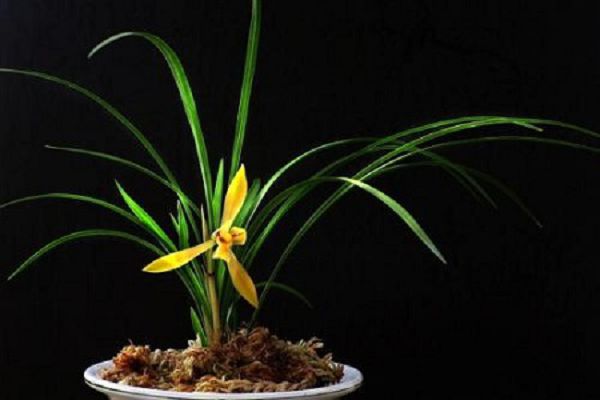
Orchids are a traditional precious flower of China and a famous flower of the world. People have always regarded orchids as a symbol of nobility and elegance, and together with plum, orchid, bamboo and chrysanthemum they are called the "Four Gentlemen." The orchid, with its delicate fragrance and understated elegance, is ranked alongside the chrysanthemum, narcissus and sweet flag as the "Four Elegant Flowers and Plants," with the orchid ranking first among the four. Orchids are plain and unadorned, with evergreen leaves that are soft yet firm, and flowers with a subtle, far-reaching fragrance; they have extremely high ornamental value and are treasures for display in the living room, bedroom, or as accents in the study or entrance hall. Many people like to grow potted orchids at home. Below, let us look at the details:.
I. Cultivation Methods
1. Soil
Use acidic soil to grow it, not alkaline soil. If using a specialized potting mix, it is best to use orchid mud, or mix and stir rotten leaves and garden soil evenly.
2. Temperature
It needs a range of 15 to 25 degrees. From March to October, it should be 18 to 25 degrees; from October to March of the following year, it should be 10-18 degrees. In severe winter it can endure low temperatures of minus 5-8 degrees, but it is best to have 3-8 degrees. You can place it by a south-facing window, and the soil in the pot will not freeze.
3. Watering
The amount of water should be determined according to different stages, different growth phases and different environments. In severe winter it stops growing, so watering should be controlled, generally once every 5-7 days, and the soil just needs to be slightly moist. If the soil is already dry, wait until a sunny day and spray with water close to the indoor temperature, but do not flood it.
4. Fertilizing
Do not use fertilizer in large doses; it must first be decomposed. You can use organic fertilizer or a specialized fertilizer. When it grows flower buds, keep only one of the healthiest and best-looking buds and cut off the rest. You can also spray some fertilizer specially for flowers, which can help it become more beautiful and extend the flowering period. After the flowers wither, remove the flowers rather than waiting for them to fall naturally; this can reduce the loss of nutrients and make flowering easier the following year.
5. Pests
It is relatively prone to pest problems, such as scale insects. During care, ensure ventilation and air circulation, and the soil should have good drainage. If it becomes diseased, you can use thiophanate-methyl to treat it. If the situation is especially severe, replace the soil and pot.
6. Light
Orchids prefer shade and fear direct strong light, so shading is needed in spring, summer and autumn. For growing orchids at home, to control the amount of light, it is best to place them on a balcony windowsill or under the eaves with bamboo blinds for shade. Generally, provide shade from 9 a.m. to before 6 p.m., and open the blinds in the morning and after 6 p.m. so they receive scattered sunlight. In winter, move them indoors to a place with visible scattered light, but also avoid direct sunlight. Among orchids, the shade tolerance of Cymbidium sinense is the strongest, followed by Cymbidium ensifolium, while Cymbidium goeringii and Cymbidium faberi are weaker in shade tolerance.
7. Pruning
During orchid cultivation, the plants need pruning. For example, when old leaves turn yellow and withered, they all need to be pruned, which helps the other leaves grow and also improves ventilation. Diseased leaves especially need timely pruning to prevent contagion. In addition, scissors also need to be disinfected to prevent infection.
8. Repotting
Orchids grow relatively slowly, so they can be repotted once every 1-2 years after the flowers fade. When potting, first place about 3 cm of tile pieces, furnace slag, etc. at the bottom of the pot to aid drainage. Then, put in a layer of potting soil, place the orchid seedling in the center of the pot, straighten the roots and let them spread naturally, and when the soil is filled to halfway, gently lift the orchid seedling while shaking the pot so that the soil and roots bind closely together. When the soil is filled to 2-3 cm from the pot rim, gently press it firm with your hand.
II. Precautions for Orchid Cultivation
1. Orchids are mainly distributed in the southeast and southwest regions. They mostly grow wild in moist valleys under sparse forests and in shaded places by rocks, so they prefer a warm, humid climate, like shade and moisture, require 70-90% shading, and avoid high temperatures, dryness and strong light.
2. During orchid cultivation, withered yellow old leaves and diseased or insect-damaged leaves should be continuously cut off to aid ventilation. After flower buds emerge from the soil, each plant should keep one strong flower bud and cut off the rest, so as to avoid consuming too many nutrients and affecting flowering the following year. After the flowers fade, the flower stalks should be cut off.
3. Orchids need protection from cold in winter. Terrestrial orchids have strong cold resistance, while epiphytic orchid types require higher overwintering temperatures and should be moved indoors early or protected with plastic sheds to avoid freezing; the indoor temperature is best kept at 10-15°C, and indoor care should ensure ventilation. As the weather gradually warms in spring, gradually move the orchids to the courtyard or balcony.
4. For home orchid cultivation, natural rainwater, stream water, well water and river water are best for watering. If using tap water, first store it in a vat and expose it to the sun to remove bleaching powder before use. If tap water is used to water flowers for a long time, the growing medium will gradually become alkaline.
5. When growing orchids, ferrous sulfate can be applied once at intervals to increase soil acidity. In addition, watering orchids with fermented rice-washing water can also keep the soil in a slightly acidic state.
Morphological Characteristics of Orchids
Epiphytic or terrestrial herbs, rarely saprophytic, usually with pseudobulbs; pseudobulbs ovoid, elliptic or fusiform, less often absent or elongated into a stem-like form, usually enclosed within the sheath at the leaf base. Leaves several to many, usually borne at the base of the pseudobulb or on lower nodes, two-ranked, strap-shaped or rarely oblanceolate to narrowly elliptic, generally with a broad sheath at the base that surrounds the pseudobulb, with a joint.
The scape is lateral or arises from the base of the pseudobulb, erect, curved outward or pendulous; the raceme has several to many flowers, less often reduced to a single flower; floral bracts long or short, not falling during anthesis; flowers larger or medium-sized; sepals and petals free, more or less similar; lip 3-lobed, sometimes connate with the column at the base for 3-6 mm; lateral lobes erect, often more or less embracing the column, mid-lobe generally curved outward; the disc has 2 longitudinal lamellae, usually extending from the base to the base of the mid-lobe, sometimes enlarged at the tip or interrupted in the middle, less often fused into one; the column is relatively long, often more or less curved forward, winged on both sides, concave on the ventral surface or sometimes with short hairs, pollinia 2, with a deep cleft, or 4 and forming 2 unequal pairs, waxy, connected by a very short, elastic caudicle to a nearly triangular viscidium.
The flowers usually seen are composed of several parts including the pedicel, receptacle, calyx, corolla, gynoecium and androecium. The orchid is a peculiar flower, and its peculiarity lies in the fact that its floral structure is unlike others. The peculiar structure of the orchid is an adaptation for insect pollination, and it has a column, rostellum, pollinia and lip, etc. In addition, orchids have bilaterally symmetrical flowers, a sac and spur with nectaries formed at the base of the lip, a reduced number of stamens, an inferior ovary, diverse flower shapes, sizes and colors, and are mostly herbaceous plants, epiphytic or saprophytic.
Growth Habits of Orchids
Orchids originally grow in hilly areas or beside mountain springs and flowing water in range upon range of lofty mountains and continuous mountain chains. Some grow in valleys and deep ravines on tree-covered, sloping hillsides, or in crevices with rocks and relatively deep soil layers. Because orchid categories differ, their living habits also differ. Cymbidium goeringii prefers shade, while Cymbidium ensifolium prefers sun, but both like a warm and humid climate. Orchid root systems are distributed on the surface layer of the soil and require soil rich in humus, loose in texture, with good permeability, fertilizer retention and water retention. The soil is acidic, with a pH value between 5.5 and 6.5. Orchids most avoid coal smoke and dust, and also fear blazing sun and violent wind and rain. Places with air pollution are not conducive to orchid growth. The root system needs orchid mycorrhizal fungi to coexist with it, otherwise growth will be poor.
Distribution Range of Orchids
China has a vast territory, complex ecological environment and many vegetation types, so orchid resources are very rich, and they are distributed throughout the country, but in terms of quantity distribution they decrease successively from south to north. The provinces with the greatest variety of orchid distribution in China are Yunnan, Sichuan and Taiwan, China.
In China, apart from North China, Northeast China, and Ningxia, Qinghai and Xinjiang in the northwest, every province and region has different species of Cymbidium plants. Generally speaking, terrestrial orchids mostly grow in temperate and subtropical regions, such as Jiangsu, Anhui and Henan; epiphytic orchids mostly grow in tropical and subtropical regions, such as Guangdong, Fujian and Taiwan, China.
Propagation Methods of Orchids
1. Division: This can be done in both spring and autumn, generally once every three years. Any plant that grows robustly and has dense pseudobulbs can be divided. After division, each clump should retain at least 5 pseudobulbs connected together. Before division, reduce watering to make the potting soil relatively dry. When potting after division, first cover the drainage hole at the bottom of the pot with broken tile pieces, then spread coarse gravel to occupy 1/5-1/4 of the pot depth, then add coarse-grained soil and a small amount of fine soil, and then plant with sandy loam rich in humus.
2. Sowing: Orchid seeds are extremely fine, and the seed contains only one incompletely developed embryo, with very low germination capacity. In addition, the seed coat does not easily absorb water, so sowing by conventional methods cannot germinate them. Therefore, orchid mycorrhizal fungi or an artificial culture medium are needed to supply nutrients before they can germinate.
The Flower Language of Orchids
Orchids generally describe a gentleman, and are often used to describe a woman as an orchid in a secluded valley.
Oncidium: hidden love
Gladiolus: elegance, longevity, peace and health
The flower language of orchids: indifference to fame and fortune, elegance, beauty, nobility and virtue.