How Many Times a Year Do Pigs Reproduce? A Detailed Explanation of the Pig Breeding Cycle
The Pig Breeding Cycle: How Many Times a Year Do Pigs Reproduce?
Generally speaking, one of the common characteristics of pig breeds in China is strong reproductive capacity. Boars begin producing sperm at around 3 months of age, and sows begin coming into heat and ovulating, 3 months earlier than Western breeds. For example, the first estrus of Meishan sows usually occurs at 75 to 85 days of age. Under normal feeding conditions, they can be bred for the first time at 6 to 8 months of age and can farrow for the first time at 1 year of age. According to reports, Taihu pigs have farrowed as early as 7 months of age.
In terms of reproductive performance, the Taihu pig is the breed with the highest litter size among all known pig breeds in the world. According to statistics, sows average 12.14 piglets in the first litter, 14.88 in the second litter, and 15.83 in the third and later litters. On February 17, 1982, Yuecheng Commune, Jiangyin City, Zhejiang Provincebreeding pigfarm - after an Erhualian sow was mated with a Meishan boar, she delivered her 8th litter, with a litter size of 42 piglets, 40 live-born piglets, and a birth litter weight of 29.6 kg, setting a record for the largest litter size in a single farrowing. Sows that have already farrowed average about 10 piglets per litter, a higher yield than other livestock.
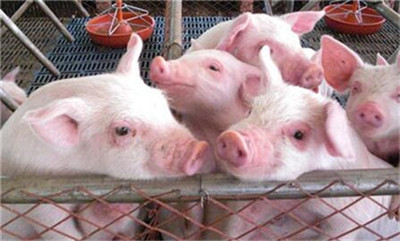
A sow's ovaries contain 110,000 oogonia, but over the course of her reproductive lifespan she ovulates only about 400 eggs. A sow can ovulate 12 to 20 eggs in one estrous period, yet the litter size is often only 8 to 10 piglets. A boar ejaculates 200 to 400 milliliters at a time, containing 20 billion to 80 billion sperm. It can thus be seen that the reproductive rate of pigs is not especially high, but their reproductive potential is very great. Experiments have shown that hormone treatment can cause a sow to ovulate 30 to 40 eggs in one estrous period, with some sows ovulating as many as 80. Therefore, as long as appropriate measures are taken to improve nutrition, with proper feeding and management and advanced breeding methods, it is possible to raise the reproductive efficiency of sows.
Because pigs mature sexually early and both the gestation and lactation periods are relatively short, the generation interval is also short, generally averaging 1.5 to 2.0 years. If appropriate measures are taken to select superior individuals from the first-litter pigletsbreeding pigfor breeding, the generation interval can be shortened to one year, that is, one generation per year. This is the most favorable condition for rapidly increasing the number of pigs in a herd, speeding up the breeding process and providing meat. At the same time, because pigs have strong reproductive capacity, a large number of offspring can be multiplied in a short period. One sow producing 2 litters per year means that spring-born piglets can be bred and farrow within the same year, and more than 70 offspring can be multiplied within one year, achieving three generations under one roof.
Lean-type pigs likewise have the characteristics of multiple litters, high yield and a short generation interval, but they reach sexual maturity and physical maturity somewhat later, and their ability to deposit body fat is also later than that of other pigs.