Practical 49-Day Management Plan for Sows Entering the Farrowing House
The 49-day management plan for sows entering the farrowing house is truly very useful!
This refers to one week of feeding sows before farrowing, 28 days of lactation, one week of continued rearing of piglets after weaning (35 days), and one week of flushing and disinfecting the empty house after the piglets are moved out. To make it easier for stockmen to operate, we have organized the weekly tasks and priorities in the farrowing house, simple and clear, so that any worker with a little education can easily follow them.
Week 1
1. Task: Flushing, disinfection, and leaving the house empty
2. Schedule:
Day 1: Clear leftover feed from the troughs, organize the facilities and tools in the house, and prepare for flushing.
Day 2: Flush clean. In addition to the slatted floor and the ground, focus on the creep box, the bedding boards, the sow troughs, and the piglet drinkers.
Day 3: Disinfection. In three steps. Step one, spray disinfection using a 5% caustic soda solution; step two, soak the creep box bedding boards in a 5% caustic soda solution for 4 hours; step three, place all the flushed and disinfected items back into the house and fumigate with Baidusha for disinfection.
Day 4: Leave the house empty, open the windows, and let the house dry as early as possible. Workers may take time off during this period. One day before the pigs enter, prepare a week's worth of medicated lactating sow feed.
Week 2
1. Task: Bring in the pigs, raise them, and prepare for farrowing assistance.
2. Date schedule
Day 1: The sows move onto the farrowing crates. After the sows are on the crates, carry out one spray disinfection with the pigs present (the sows must be thoroughly flushed clean before moving onto the crates).
Day 2: Check the body condition of the sows and formulate prenatal care measures, paying special attention to any signs of mastitis.
Day 3: Keep the house temperature suitable. Prepare farrowing equipment such as farrowing tools, emergency medicines, heat lamps, stoves, etc. Check the sows' milk let-down every day before getting off work to determine whether they are about to farrow.
3. Temperature control:
Initially close to that of the gestation house, then gradually transition to a suitable 18-22 degrees.
4. Feed:
Feed medicated feed. The daily feeding amount is determined by the number of days until the expected farrowing date. Start reducing feed three days before farrowing, reducing by one kilogram per day.
5. Farrowing assistance:
For sows about to farrow, assist with farrowing; all operations must follow the operating procedures.
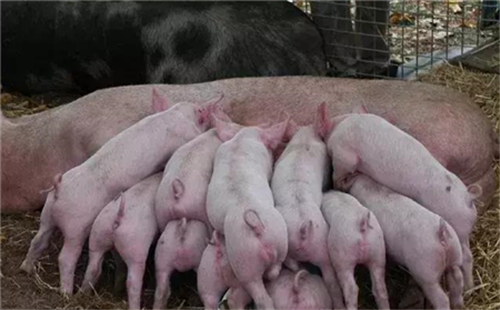
Week 3 (First week after farrowing)
1. Task: Farrowing assistance and postpartum care
2. Key tasks:
(1) Make sure all newborn piglets get enough colostrum within one hour after birth.
(2) During farrowing, there must be someone specially attending, and the operating procedures must be strictly followed.
(3) After birth, place the piglets in the prepared creep box. The temperature where the piglets lie in the creep box should be around 32-34 degrees.
(4) On the day after farrowing, carry out litter merging and cross-fostering, and reasonably distribute sows and piglets (according to body strength and milk supply).
(5) Supplement iron and selenium within three days after farrowing.
(6) Piglets are not allowed to lie outside the creep box. When manpower is sufficient, someone must monitor every suckling.
(7) No accumulated manure from sows is allowed on the farrowing crates.
(8) Absolutely avoid dampness in the farrowing house. No water leakage is allowed anywhere, and this must be maintained consistently.
3. Feed:
According to the sow's body condition and appetite, do not feed or feed little on the day after farrowing. On the second day, feed 1-2 kg. After that, increase by 0.5 kg per day, gradually increasing the feeding amount, until the normal feeding amount is reached on the seventh day.
4. Temperature control:
At this stage, piglet temperature control is the main focus, while also taking into account the sow house temperature.
Week 4 (Second week after farrowing)
1. Task: Normal rearing of sows and piglets
2. Key tasks
(1) Gradually lower the temperature of the piglet creep box to 28-30 degrees by changing the wattage of the heat lamps, the height of the hanging lamps, and the size of the creep box vents.
(2) Focus on increasing the sow's feed intake, thereby improving lactation performance.
(3) Begin training the piglets to eat feed (which can becreep feed, or sow feed).
(4) Replace dirty piglet creep box bedding.
(5) Daily, pay attention to piglets that are not getting enough milk and to sick or weak piglets, and handle them promptly.
3. Feed:
Increase from three meals to four meals. In summer, feed the pigs in the cool morning and evening to increase feed intake.
4. Temperature control:
It is best to keep the house temperature at 18-22 degrees. If it exceeds 25 degrees, open windows for ventilation or use fans, so as not to affect the sow's appetite.
Week 5 (Third week after farrowing)
Basically the same as Week 4. Lower the piglet creep box temperature by 1-2°C. When the house temperature is high, remove the heat lamps. At 21 days after farrowing, inject swine fever vaccine.
Week 6 (Fourth week after farrowing)
1. Task: Preparation for weaning
2. Key tasks
(1) Remove the heating facilities from the piglet creep box to adapt the piglets to post-weaning conditions.
(2) All piglets should know how to eat feed; for the few that do not eat supplemental feed, feed them manually by force.
(3) Wean well-developed piglets early, and transfer sows with good milk supply to piglets that are low in weight or sickly and weak, to ensure uniform weaning.
(4) Flush the floor two days before weaning to maintain air quality in the house at weaning. (Do not flush after weaning.)
(5) Prepare stoves in case heating is needed for the piglets after weaning.
3. Feed:
Starting on the third day before farrowing, begin reducing the sow's feed, reducing by 1-1.5 kg per day, until it is reduced to 3 kg at weaning. Feed the piglets a special creep feed for weaning.
4. Temperature control:
At weaning, the temperature should be 1-2°C higher than before weaning.
Week 7 (One week after weaning)
1. Task: Rearing of weaned piglets
2. Key tasks
(1) The house temperature should be 1-2°C higher than before weaning. If necessary, add heating facilities (such as infrared lamps, etc.).
(2) The weaningcreep feedremains unchanged, and the piglets are fed freely.
(3) Observe carefully. When piglets that cannot eat feed are found, pick them out promptly, feed them manually, or let the sow nurse them for a few more days.
(4) Make preparations for transferring the group.
Note: Due to limited space, the above introduction is not very detailed, but if the above plan is implemented, it is not difficult to achieve a weaning survival (qualified) rate of 95% or more for qualified piglets in the farrowing house.