Causes and Solutions for Blackened Tips on Orchid Leaves
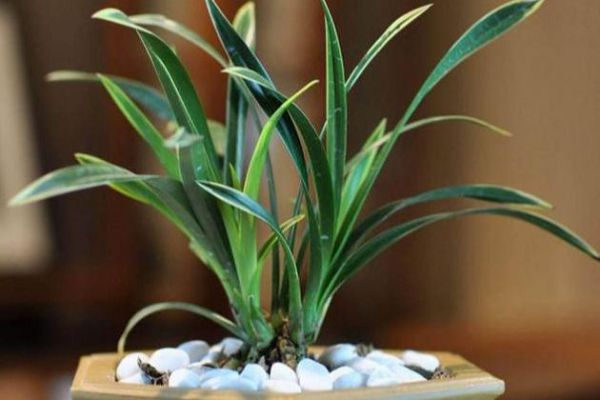
Orchids are a favorite flower for many gardening enthusiasts, and there are many varieties of orchids, each with its own unique charm. Keeping a pot of elegant orchids, understated and refined, placed in a study or living room can instantly elevate the taste of your home environment.
Orchids are a wonderful flower, but while growing orchids is easy, growing them well is not an easy task. Watering, fertilizing, light, and temperature are all major areas of study. Today, TheNaturePlanet is here to discuss a disease problem in orchid growing, namely the issue of blackened leaf tips on orchids. This is also a concern for many orchid lovers. We hope you can learn something you need from this and apply it when you encounter problems.
Before discussing the problem of blackened orchid leaves, let us first categorize some of the causes that lead to blackened leaves in orchids: blackened leaves caused by natural factors, blackened leaves caused by improper management, and blackened leaves caused by pathogen infection. Below we will analyze the causes and treatment methods one by one.
I. Natural Factors
Blackened orchid leaves caused by natural factors commonly include air humidity being too low, especially in winter when blackened orchid leaf tips are quite common. This is caused by an imbalance in water in the orchid leaves due to insufficient air humidity. The same problem also occurs during periods of high temperatures and heavy rain, when climate changes are greater. Of course, poor air quality in the environment may also be a cause.
Therefore, we can increase air humidity through misting, keeping the orchid in a suitable growing environment, which can effectively prevent leaf blackening caused by humidity problems. Orchids are best placed in a semi-shaded spot where they won't be hit by rain, which can to some extent reduce leaf blackening caused by sudden climate changes. If it's an air quality issue, it's generally not something that can be changed in a home environment.
II. Improper Management
Blackened orchid leaves caused by improper management generally include excessive light, insufficient light, overwatering, underwatering, overfertilizing, and spraying chemicals that are too concentrated. These causes can all be changed by human effort.
Therefore, growing orchids in a semi-shaded or shaded spot with sufficient light can prevent leaf blackening caused by light problems; avoiding rain exposure and watering according to the "water when dry, stop when wet" principle or keeping the soil slightly moist can help orchids avoid blackening due to water damage; using dilute fertilizer applied frequently and using orchid-specific fertilizer can effectively prevent fertilizer damage; when using chemical treatments, always follow the instructions and dilute to the appropriate concentration before spraying. These problems are all within human control, and we only need to be a little more careful to avoid leaf blackening.
III. Pathogen Infection
Leaf blackening caused by pathogen infection is generally more serious and will cause the blackening to become increasingly severe. If not controlled in time, it will lead to serious growth problems in the plant. However, for leaf blackening caused by bacterial infection, prevention is generally more important than treatment, because once leaf infection occurs, it is very difficult to control. Below, we will introduce one by one the problems that can cause orchid leaves to turn black.
1. Brown Spot Disease
This is the most serious tip scorch disease caused by bacterial infection. It manifests as brown lesions. In the early stages, water-soaked brown lesions appear as if scalded by boiling water, and they spread very quickly, causing the entire leaf to wither and die. It is also highly contagious.
2. Anthracnose
This is a tip scorch disease caused by fungi. To determine whether it is anthracnose, we can observe whether there are several wavy horizontal black bands on the leaves. This disease cannot be eradicated by pruning diseased leaves, and it is also a relatively serious tip scorch disease.
3. Black Spot Disease
This is caused by fungi and is one of the common leaf diseases of orchids. The lesions are generally circular and appear on the leaves and at the edges. When severe, the lesions merge together, reducing the ornamental value of the leaves.
4. Leaf Blight
Leaf blight is also caused by fungal infection. In the later stages of the disease, the leaf tips turn grayish-white, the affected areas wither and die, and the boundary with healthy leaf tissue appears dark brown. It progresses inward over time, and in severe cases the entire leaf dries up and the number of affected leaves increases.
5. Tip Blight
This is also a tip scorch disease caused by fungal infection. It manifests as the dead portion appearing grayish-yellow, but unlike anthracnose, it does not show band-like marks. The boundary between the tip blight area and healthy leaf tissue shows dark brown streaks.
The above five common diseases generally do not appear alone; many times multiple symptoms appear simultaneously or alternately. So these bacterial and fungal infections are difficult to treat, and prevention is best, trying to avoid these diseases as much as possible. If these diseases do occur, we need to actively control them. Below we introduce the control methods.
IV. Disease Control
1. Prune Diseased Leaves
Cut off leaves that have already been infected with disease. Be sure to thoroughly cut off the discolored portions or the entire leaf. If pruning only part of a leaf, be sure to cut at least 1 cm into the healthy green portion. This prevents re-infection and the spread of disease.
2. Targeted Treatment
Before using medication, we need to identify the disease correctly so we can treat it accordingly. For reference methods, see Part III. The main distinction we need to confirm is whether the disease is caused by bacteria or fungi.
If it is caused by bacterial infection, we can use agricultural drugs such as streptomycin, copper hydroxide (Kocide), and leaf blight inhibitors for control. If it is caused by fungi, we can use thiophanate-methyl, chlorothalonil, etc. If you really cannot determine the cause, you can use both bacterial and fungal medications together, which can achieve twice the result with half the effort.
3. Timely Treatment
For leaf disease problems, we must be proactive and treat them promptly. Otherwise, a small problem will become a big problem, and missing the best window for rescue will lead to the death of the orchid. In daily care, we should actively prevent diseases. Starting from early spring, we can regularly spray medications, once every half month, using fungal and bacterial medications together or alternately. Prevention is the best approach.
4. Precautions
For diseased plants whose leaves have already turned black, never spray water on the leaves. Spraying water will cause the disease to develop more rapidly, and pathogens will spread faster with the water flow. Normally, orchid leaves accumulate a lot of dust, which we need to clean promptly so the leaves can perform photosynthesis better, promoting plant health and reducing the chance of disease.