How to control costs during the pig farm design phase? Zhang Wei shares key points
In recent years, a large number of large-scale modern pig farms have been built and put into production, and the structure of the pig farming industry has undergone great changes. However, because the construction of large-scale modern pig farms in China started not long ago, and localization and standardization are insufficient, various problems have emerged in the process of pig farm construction over the past one to two decades. One very prominent problem is that cost optimization of pig farms has not received effective attention. A great deal of ineffective cost has been paid in the process of pig farm construction, or costs have been blindly cut at the expense of quality, causing major or long-term economic losses. In this article, the author combines personal experience to introduce the key points and methods of cost optimization during the pig farm design phase.
I. Basic concepts of pig farm project cost optimization
When we mention cost optimization, many people understand it as structural optimization or design optimization. In fact, cost optimization is not limited to the design phase, nor is it simply structural optimization. Cost optimization is obtaining the greatest possible benefit on the basis of controllable costs. This is atechnicalissue, and even more so a management issue, requiring collaboration and coordination among multiple parties. Taking a pig farm project as an example, each phase - site selection, design, bidding and procurement, and construction - has a major impact on project cost, but different phases are generally led by different departments or units, so setting clear collaboration processes and unified control objectives is particularly important.
Cost optimization has different models according to different development stages and external environments. There are three common cost optimization models
1. Accounting-based cost optimization
The basic work or initial stage of cost optimization, belonging to after-the-fact management
2. Target-management-based cost optimization
Emphasizes presetting a cost control target, adopting pre-control measures for land acquisition, design, bidding and procurement and other links, with cost forcing
3. Supply-chain-based cost optimization
Compressing costs toward manufacturers through strategic procurement and centralized procurement
At present, apart from a few group companies with very large pig farm project construction volumes that can achieve supply-chain-based cost optimization, most pig farm projects are still at the accounting-based stage of cost optimization. To do a good job in cost optimization, it is necessary to gradually transform to target-management-based cost optimization. For example, many pig farm projects currently exceed budget because economic considerations were neglected during the site selection phase. If only after-the-fact accounting is done, such problems cannot be solved; pre-set control indicators must be proposed. In southern regions, land that meets biosafety requirements and is planned in mountainous areas is limited, and many plots have high costs for "three connections and one leveling" and high foundation treatment costs. For such plots, the costs of three connections and one leveling and foundation treatment should be estimated in the early stage. Taking a sow farm as an example, the cost of three connections and one leveling and foundation treatment should not exceed 1000 yuan per sow. If it exceeds the control indicator, it is recommended to abandon the plot or approve it separately. Clear cost targets should be proposed for different phases, and supporting reward and punishment systems should be implemented.
Pig farm project cost optimization is a systematic task. Through decomposition of targets and supporting management processes and measures, the goal is ultimately to obtain the greatest possible benefit on the basis of controllable costs.
II. Cost optimization targets during the pig farm design phase
The design phase can affect engineering cost by more than 75%. The quality of design directly affects the amount of construction cost and the length of the construction period. The pig farm design phase is a key phase for cost optimization. To do a good job in cost optimization during the pig farm design phase, key control indicators should be proposed for each design stage. Below, the author offers personal suggestions on control indicators for readers' reference.
1. Process scheme design
Pig farm design is different from residential or public building design; the process specialty is the leading specialty. The process scheme design has already determined many key cost indicators. At present, process scheme design is generally led by production management personnel, veterinarians, or process designers from equipment manufacturers, and in the design process, design schemes are rarely compared and quantitatively evaluated for economy, while the impact of the process design stage on cost is enormous. Taking a 10,000-sow farm as an example, adjusting the outer frame of the gestation stall from a one-inch pipe to a six-point pipe reduces cost by only about 35 yuan per sow, while adjusting the gestation stall size from 0.68 m x 2.3 m to 0.65 m x 2.3 m reduces cost by about 150 yuan per sow. There are many factors affecting cost in the process design stage. For ease of operation, it is recommended to use the building area corresponding to unit production capacity as the main control indicator. It is recommended that production buildings, office and living buildings, and supporting ancillary buildings be given separate design control indicators.
2. Construction drawing design
Quota design in the construction drawing design stage is relatively mature in the residential design field. Generally, the amount of steel reinforcement and concrete per square meter is agreed upon according to different floor counts and different locations. For pig farm projects, the steel content per square meter of the main and secondary steel structures of the pig house should be used as the main control indicator. At present, the steel content of the main and secondary steel structures in pig house design varies greatly, basically fluctuating in the range of 8-20 kg/m2. Some design units give excessive consideration to safety reserves, resulting in an increase of more than 100 yuan per square meter in the steel structure portion alone. If a steel pipe truss method is adopted, it is recommended that the steel content per square meter of the main and secondary structures of the pig house be controlled below 12 kg/m2. Corresponding control indicators can also be proposed for the amount of steel reinforcement and concrete used in pig houses, supporting ancillary buildings, and office and living buildings.
3. Others
Using only the control indicators mentioned above is far from enough for cost optimization. Many cost-related practices cannot simply be extracted as controllable indicators, but they can be clarified through ready-made standards. The building construction methods of pig houses, including roofing, ceilings, plastering of internal and external walls, floors, and floor trenches, can be unified through a standard building construction method table. Some other general requirements can be determined through a standard general specification for building design.
Some practices that have a major impact on quality also need to be reflected in standardized design. For example, the ceiling method of pig houses has very high requirements for corrosion resistance and airtightness. The author recommends the following method.
-- One layer of spunbonded polypropylene membrane waterproof and breathable layer (85-90 g/m2)
-- Two layers of 75 mm + 75 mm thick glass wool (bulk density 16-18 kg/m2) with staggered overlapping
-- One layer of 10-silk PE vapor barrier laid below
-- Ceiling purlins (rubber-plastic cotton attached under the purlins to prevent cold bridges)
-- 0.4 mm thick YX15-225-900 type galvanized profiled steel sheet, galvanized on both sides 180 g/m2, HDP coating, white.
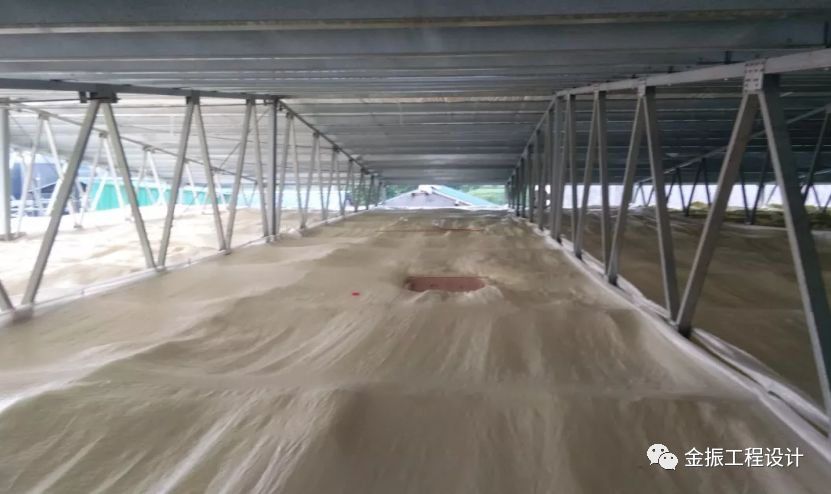
Figure 1 Pig house ceiling method
Specific requirements should also be put forward for water and electricity materials, steel structure galvanized layers, roof panels, steel structure fasteners, etc., regarding material quality and brand.
The cost optimization targets during the pig farm design phase should form control indicators for each design stage, be strictly implemented, and be continuously refined and optimized. For influencing factors that are not easily reflected by indicators, control them through standardized design. For standardized design, it is necessary to fully understand the industry situation and continuously refine and optimize it in combination with one's own experience.
III. Cost optimization processes and measures during the pig farm design phase
Having understood the basic concepts of pig farm project cost optimization and the targets of cost optimization during the pig farm design phase, what processes and measures can do a good job in cost optimization during the pig farm design phase is the key to implementation.
The current common process for pig farm project design is as follows: the construction party submits a design commission letter and relatedtechnicalmaterials (topographic maps, etc.), the design unit carries out construction drawing design according to the commission letter and related materials, and after the construction drawing design is completed, it is sent to the construction party for review. In the process of execution, the following problems are likely to occur:
1. Unclear requirements in the design commission letter, leading to rework
2. Too short a construction drawing design cycle, lacking process communication and control, leading to rework or rough design
3. Insufficient review of construction drawings, leading to many problems during construction
In response to these problems, the following measures are recommended.
1. The construction party should pay attention to the submission depth of the design commission letter and relatedtechnicalmaterials. The requirements for quota design and standardized design should be reflected in the commission letter. If the construction party itself does not have the relevanttechnicalstrength, it may use design bidding and design scheme competition to determine the requirements for quota design and standardized design. The construction party invites design units to participate in design bidding or design scheme competition to obtain numerous design schemes and corresponding requirements for standardized design and quota design; then organizes an expert evaluation group to select the optimal design unit from them, or recombines the merits of the schemes provided by each design unit to propose the best scheme and complete the design commission letter.
2. Sufficient time should be reserved for construction drawing design, and process communication should be strengthened. It is recommended to add a building scheme confirmation step. After the design commission letter is delivered to the design unit, the design unit concentrates on building scheme design (the building scheme should include the general layout scheme, plans, elevations and sections of each individual building, and main construction methods) and conducts scheme comparison. After the building scheme design is completed, a scheme design review and confirmation meeting is held. The construction party, the design unit, and third-party experts commissioned by the construction party jointly confirm the building scheme and review and confirm the corresponding control indicators, so as to avoid rework in the construction drawing stage.
3. Strengthen the construction drawing review stage, strictly require the design unit to do a good job in internal review, and the construction party should reserve sufficient review time
4. Strengthen pre-constructiontechnicaldisclosure. After the construction party confirms and before formal construction, the construction party, design unit, and construction unit should conduct sufficienttechnicaldisclosure, exchange views on common problems in construction, and confirm the mechanism and process for subsequent communication.
The above are some improvements that should be made in the process to do a good job in cost optimization during the pig farm design phase. In addition to process improvements, some supporting measures should also be implemented.
The construction party is the main body of project management, but to do a good job in cost optimization during the pig farm design phase, the enthusiasm of the design unit must be fully mobilized. Most design units do not have good cost optimization awareness and corresponding capabilities. The income of most designers is "low fixed salary + high output bonus." Designer income is related to output, not to quality and cost indicators. Corresponding requirements must be clarified from the stages of design unit selection and contract management. Common measures are as follows:
1. Clarify quota design requirements in the design contract
2. Reward and punishment rules should be stipulated in the design contract, and combined with the design unit's reward and punishment mechanism to ensure that rewards can be issued to specific designers
The construction party's cost management during the design phase also includes the following management measures:
1. Adopt a strategic cooperation approach for design units and cost consulting units, giving priority to cooperation with strategic partner units, so that the design team is stable, communication is convenient, and overall efficiency is high
2. Conduct training at appropriate times, using internal and external resources to train internal management departments and cooperative units, share optimization results, and enhance project value
3. Form a project review and summary mechanism. After the project ends, all participants jointly conduct a summary review, share successful experience, point out existing problems, and further optimize processes and standards
Cost optimization during the pig farm design phase must rely on appropriate processes and measures for support, fully utilize internal and external resources, improve the professional level and management level of all participating parties, and use training, sharing, and review mechanisms to further optimize processes and standards.
Conclusion
Cost optimization during the pig farm design phase requires multi-disciplinary coordination and high professional standards, and project experience also plays an important role in doing a good job in design-phase cost optimization. Apart from a few group companies that can organize corresponding teams, most projects still need to rely on external resources to do a good job in cost optimization during the pig farm design phase. In the future, pig farm EPC contractors and pig farm design units will gradually take cost optimization during the pig farm design phase as one of their work priorities. In the future, professional third-party design consulting companies may also emerge.
It is believed that with the efforts of all parties, cost optimization during the pig farm design phase in the future will effectively enhance the value of pig farm projects.