Clivia Watering Times and Basic Watering Tips
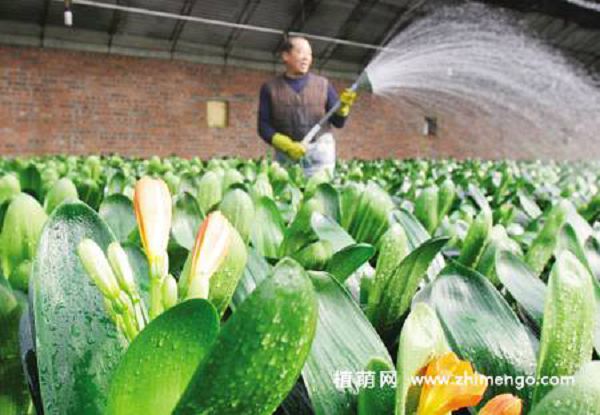
The most basic requirement for growing Clivia well is mastering the correct watering method. Whether Clivia grows slowly or quickly, whether its leaves are green and glossy or yellow and wilted, whether it blooms continuously or fails to bloom or gets stuck at the bud stage - all of these may be related to watering.
Basic Tips on Watering Clivia
1. Water Clivia in the right amount
Some people hear that Clivia is a moisture-loving plant and water it every day, causing the potting soil to stay wet for a long time; with insufficient air in the soil, the roots are severely deprived of oxygen and rot. Others worry that too much water will cause Clivia root rot, so they only give a little water each time or spray a little with a kettle, leaving water on the leaves, while the soil inside the pot is actually dry. Over time, this causes Clivia to grow slowly, with wilted leaves, and even to wither and die.
The correct approach is not to water when the potting soil is dry, and when you do water, water thoroughly without letting it leak out. This ensures even contact between water and roots, which is good for root absorption, while also avoiding the loss of soil nutrients. If you only water a little, the roots deep in the pot get no water, and the deep soil clumps together and separates from the pot, forming a gap layer; after that, whenever you water, the water leaks out from the pot wall. So even though you have watered, the middle and lower layers of soil are still dry.
2. Clivia watering times and water temperature
In spring, watering is best done between 8 and 9 in the morning. Let tap water or well water sit for 2 to 3 days so the water temperature approaches room temperature before use. In summer, the watering time is around 7 in the morning; do not water at noon when the temperature is high. For small plants 1 to 2 years old, water once a day; for mature plants over 3 years old, the watering cycle can be adjusted flexibly according to pot size and soil dryness. In winter, watering is best done at noon; because the soil temperature is low, you can water with 30 to 35 degrees C water to raise the soil temperature, which helps Clivia shoot its stem early and bloom early.
3. Water quality treatment
For water used to irrigate Clivia, cities mostly use tap water, while rural areas mostly use well water. Neither of these waters is suitable for directly watering seedlings and must be treated before use. The methods are as follows:
a. pH value: Clivia grows well within its most suitable pH range of 5.5 to 6.5, but water with a pH below 7 can all be used for watering Clivia. Tap water can be used after sitting under natural conditions for 1 to 2 days. Well water mostly does not meet the requirements and needs to be tested; if the pH value is greater than 7, a small amount of ferrous sulfate or monopotassium phosphate can be added to the water to neutralize it.
b. Letting water sit: fresh tap water and well water have a temperature lower than the soil temperature and contain some impurities unfavorable to Clivia growth. By letting the water sit for 1 to 2 days, the substances in the water oxidize, impurities settle, and the water temperature approaches the soil temperature - only then can it be used.
c. Softening: some tap water and well water contain magnesium carbonate and calcium bicarbonate, making the water relatively hard. In particular, bicarbonate can affect the absorption of cations by Clivia roots and clog stomata, so such water must be improved before watering flowers. The softening method is to add 1 g of monopotassium phosphate to every 20 kg of water.