What are the key points of fertilizing orchids? A detailed analysis from three major aspects
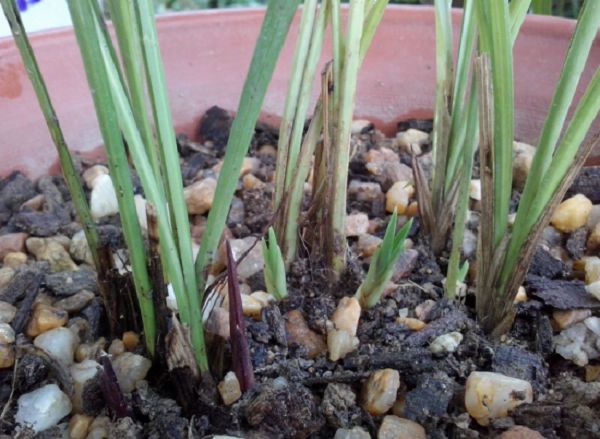
The three great secrets of growing orchids: ventilation, watering, and fertilizing! To apply these three secrets flexibly is no simple matter. Fertilizing in particular - many flower enthusiasts don't really understand it. Today let's learn about the ins and outs of fertilizing orchids.
The ins and outs of fertilizing orchids: We must remember that insufficient fertilizer will not cause fatal damage to orchid plants, nor will it greatly affect their growth and development. However, excessive fertilization or improper understanding of fertilizer properties can cause varying degrees of negative effects on orchid plants, and in severe cases can lead to death. To put it simply, if you can grow orchids without fertilizing at all, you have already grasped the essence of fertilizing. For example, weak seedlings can be grown lean, and strong seedlings - as long as the growing medium has good fertility such as Yixiang soil, humus soil, etc. - hardly need any fertilizing. But the vast majority of orchid-growing beginners will absolutely not give up unless you tell them to add some fertilizer to the pot. They won't give up until they've tormented the orchid to death - and that's also one of the joys of growing orchids. So it is necessary to seriously study, seriously explore, seriously practice, and seriously summarize the issue of fertilizing.
1. Types of fertilizer:
1) Organic fertilizer: Use soybean, peanut, corn, sesame, bean cake, rapeseed cake, sesame residue, etc. to compost into liquid fertilizer, apply as a 200-fold dilution, best used after composting for more than half a year. This type of liquid fertilizer contains more potassium and nitrogen, suitable for spring application, can promote orchid plant cell division, and with proper water management, the sprouting rate is relatively high. This fertilizer, after composting and fermentation, has a pungent odor and contains large amounts of harmful bacteria and insects. It must undergo strict sterilization and pest elimination - you can add insecticides such as acetamiprid and use after half an hour.
2) Chemical fertilizer: Chemical fertilizers take effect quickly, but their nature is not as mild as organic fertilizers. Old-brand flower fertilizers like Huabao can be used with confidence.
Accurate fertilization is based on understanding and mastering the growth habits of orchid plants, so understanding the growth habits of orchid plants is very important.
2. Fertilizer management according to the different growth stages of orchids based on their growth habits:
1) Bud-breaking stage: 8-18°C in spring is the bud-breaking temperature for orchid plants. During this period, the root system revives, the pseudobulb awakens, and the mother plant cells begin to become active. After spraying Huabao No. 4 awakening fertilizer twice, add Lanjunwang when watering to promote sprouting. During this period, there are no visible signs of growth on the surface of the orchid plant. Weak seedlings must be allowed to continue sleeping, and fertilizing should be delayed further.
2) Growth stage: 12-20°C is the normal growth temperature for orchid plants. At this time, the root system begins to spread out, last year's autumn buds break through the soil early, and the current year's new buds are also eager to try. This is the golden period for orchid plant growth and development. At this time, attention should be paid to water and fertilizer management of orchid plants. Full-price fertilizer is best, or you can apply more nitrogen fertilizer. Nitrogen fertilizer should not be too much, otherwise it easily causes new seedling leaves to be soft, thin, and large, and prone to anthracnose. At this time, fertilizing can be done by root drenching at normal proportions to achieve the goal of strengthening buds and seedlings. This is the first fertilization at the prescribed rate.
3) Spring and summer vigorous growth stage: 20-32°C is the vigorous growth stage for orchid plants. Plum rain season. During this period, orchid plants grow rapidly. Although orchid plants need large amounts of fertilizer at such temperatures, the root drenching fertilizer we applied earlier may still remain in the pot to varying degrees (coarse medium retains little or none, so fertilizing should still continue). Therefore, at this time, root fertilizing must be light to reduce the risk of fertilizer burning orchid plants as temperatures rise. Fertilizing should mainly use phosphorus and potassium fertilizers, or you can apply full-price fertilizer, with no or little nitrogen fertilizer. During this period is when pests and diseases occur frequently, so ventilation should be strengthened, water controlled, and pest and disease prevention work done diligently.
4) Stagnant growth stage: This refers to the brief stagnant growth period of orchid plants when temperatures are above 35°C, but there aren't many hours in a day when it's above 35°C. During high-temperature periods, orchid plants actually grow most rapidly, and are also most prone to soft rot and stem rot. To prevent rot, combined with some fertilizer residue from earlier applications or the growing medium itself having high fertility, during the dog days of summer, you should seize the opportunity to increase watering amount and absolutely must not fertilize. Each time, water heavily 2-3 times repeatedly, using large amounts of water to carry away the remaining fertilizer in the orchid pot. Repeat this 3-4 times to make the growing medium in the pot light and moderate - this is an important measure for orchid plants to safely pass the summer.
5) Autumn vigorous growth stage: 32-20°C in autumn is the vigorous growth stage for orchid plants. Since we diluted the growing medium in summer, and orchid plants at this time need large amounts of fertilizer, root fertilizer should be applied promptly (the second deliberate fertilization), mainly phosphorus and potassium fertilizers.
6) Winter dormancy stage: Below 8°C, orchid plants basically stop growing and enter winter dormancy. Foliar fertilizer can be appropriately sprayed.
3. Key points of fertilizing:
1) Different growing medium fertility requires different fertilization treatment.
2) Different varieties require different treatment. Different orchid species need different amounts of fertilizer. For example, Cymbidium faberi needs a large amount of fertilizer, while Cymbidium goeringii needs a small amount - only one-fifth of that for Cymbidium faberi is enough.
3) After fertilizing on a high-temperature day in the evening, you should water with "soul-returning water" the next morning. It has two purposes: first, to wash away fertilizer liquid adhering to orchid leaves; second, to rinse away excess fertilizer remaining in the pot medium, to avoid fertilizer damage harming orchid plants.
4) For newly potted orchid plants, root fertilizing can only be done after orchid roots have grown to more than 3cm long.
5) Do not apply fertilizer on low-temperature days below 10°C, high-temperature days above 35°C, or humid overcast and rainy days. This is the same as watering.
6) Fertilize based on leaf observation. If orchid leaves are thin in texture and pale in color, it indicates fertilizer deficiency. If orchid leaves are thick in texture and green in color, it indicates no fertilizer deficiency. After fertilizing, if leaf color becomes deep green, it indicates the fertilizer has taken effect; if leaf color remains unchanged, it indicates the fertilizer is too dilute and concentration should be increased. If leaf tips become scorched, it indicates too much or too concentrated fertilizer was used. You should immediately water heavily or repot and change the soil for emergency rescue, otherwise the plant will certainly die.
7) Do not fertilize when the growing medium is too dry or too wet. If too dry, orchid plants absorb too much fertilizer and are prone to fertilizer damage; if too wet, they absorb less fertilizer and the fertilizer remains in the substrate, also prone to fertilizer damage.
8) Animal fertilizers and plant fertilizers must be fully fermented. Fresh fertilizer must not be used, otherwise the orchid will certainly die.
9) Fertilizer mixing must be scientific. Generally, you need to grasp that acids and bases should not be mixed, and biological bacterial fertilizers should not be mixed with other fertilizers.
10) Spraying methods should be particular. Since fertilizer needs to be absorbed into the plant body through leaf stomata, and leaf stomata are mainly on the underside of leaves, spraying should mainly target the leaf underside. The nozzle should point upward, the mist should be fine, so that there are more opportunities to spray the leaf underside. At the same time, the spray amount should not be too large.
11) Be cautious about spraying growth hormones. Growth hormones do indeed have good effects in promoting plant growth and development, increasing germination rate, promoting early maturity, and achieving increased yield. However, their main function is to promote cell elongation. After application, plants may show excessive growth or even lodging.
12) Urea must not be applied to roots, only sprayed on leaves.
13) Variegated-leaf orchids must not be given magnesium or manganese elements.
14) Do not fertilize during the flowering period. Flower buds have a strong ability to absorb fertilizer but a very weak tolerance for it, and flowering will certainly fail.
4. Summary:
Fertilize as little as possible or not at all. For ordinary growing medium and ordinary seedlings, fertilizing 5-6 times a year is considered quite a lot.
Orchid growers are all a bit orchid-crazy. When the flowering season comes, they come out in groups to impress people - called orchid shows. Orchid King Shen Yuanru even often got up at 4 or 5 in the morning to collect dew to nourish his orchids - that was the most obsessed. Only through all this fussing back and forth can one better grasp the nature of orchids.