How to grow orchids? Master these few tips to easily grow orchids well
The gentleman among flowers – the orchid. People regard the orchid as a symbol of "beauty", "nobility", "simplicity", "virtue", "chastity", "elegance" and the like, and there are many fans as well. New orchid enthusiasts who have just gotten into the hobby want to know how to grow orchids. Everyone feels that orchids are especially difficult to grow and die quickly. Unlike other flower varieties, orchids have special growth habits. If we understand the orchid's growth habits and ensure a good growing environment for it, we will find that growing orchids well is not that difficult. So, how should orchids be grown so they do not die so easily? The editor has prepared a few introductory tips for novice orchid enthusiasts for reference only.
There are many kinds of orchids, and because their places of origin differ, their corresponding habits also differ, so some different methods must be adopted in daily care. However, most orchid habits are shared in common, and this is the foundation. Paying attention to these is enough.
The correct way to water orchids
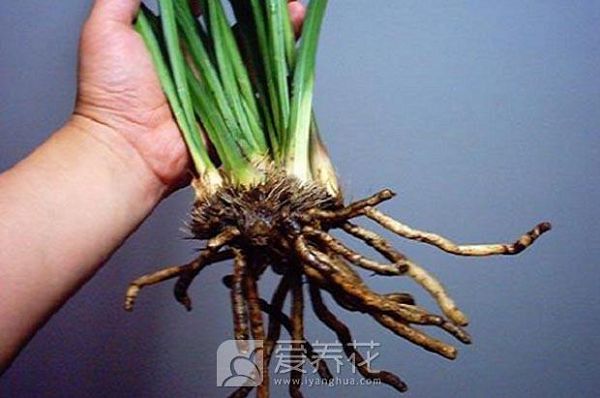
Watering orchids is the most important part, because orchid roots are thick fleshy roots that are relatively sensitive to water. They do not need too much water, but they cannot be too dry either. If a state of being too wet or too dry lasts too long, it will cause orchid root rot or hollow roots. If it lasts even longer, the plant will develop yellow leaves and withered branches, and finally the plant will die. So the root system must be kept moist. There is no specific time limit for watering; the amount of water is determined by the orchid's growth rate, the number of plants, the material of the pot used, the type of orchid, the environment, the season, and the degree of dryness or moisture of the potting soil.
Orchid root rot caused by excessive watering
Orchids like cool, shady and moist conditions; the "moist" here means keeping the soil moist. When the climate is dry, use a fine-nozzle watering can to water the leaves and potting soil until slightly moist; do not water directly, as this easily causes water to accumulate at the roots. In summer, when the weather is dry, spray water on the leaves, 2–3 times a day is enough. In winter, if the potting soil is not too dry, there is no need to water.
How to fertilize orchids
Orchids like fertilizer, yet they cannot tolerate too much fertilizer. Orchids absorb limited nutrients from the potting soil. Keep the potting soil loose and breathable so the roots do not rot. Many nutrients need to be supplemented later through water and fertilizer. During the orchid's growing period, apply thin fertilizer frequently; do not use concentrated fertilizer.
You can also make organic fertilizer yourself, such as cake fertilizer, bone meal, etc. This kind of fertilizer has comprehensive nutrients and a long fertilizer effect. When using it, it must be fully diluted with water. On cloudy and rainy days, you can also sprinkle a small amount of fermented cake fertilizer powder around the outer edge of the flower pot, and it will slowly seep into the potting soil as you water.
The editor has a fertilizer-making method: let rice-washing water sit for 1 day, then pour it into the potting soil, avoiding the orchid leaves. You can also soak apple peels in water for 1 or 2 days and then use it to water the flowers. This kind of water fertilizer contains multiple nutrients and is somewhat acidic, very suitable for orchid growth.
If you do not want the trouble, you can dilute a few granules of compound fertilizer in a bottle of water. Compound fertilizer has strong fertility, so when applying this kind of fertilizer to orchids, you must apply less to avoid burning the plant.
Points to note when repotting orchids
Orchids have many roots. For the soil used to grow orchids, it is best to use loose soil containing plenty of leaf mold or homemade acidic sandy nutrient soil with a PH value between 5–6.5. Potted orchids need to be repotted about every 2 years to give the plant enough space to grow, and division propagation can be done when repotting. If the orchid is growing vigorously and only the pot is too small, you can tip the whole orchid out of the small pot without breaking up the root system, place it directly into a pot somewhat larger than the original one, firm the surrounding area with soil, cover the surface with small stones, and water thoroughly.
How to prune orchids
Every year orchids have old shoots that wither and new buds that grow. Yellow leaves and dead leaves should be cut off in time; this helps the growth of new shoots and does not affect the ornamental effect. If an orchid has too many flower buds, some weak buds can be pruned appropriately so that the robust young shoots grow faster.
Tips
One thing particularly worth noting is that orchids are most afraid of coal smoke; once fumigated by coal smoke, they will wither and die. In winter, when moving orchids indoors to overwinter, special attention must be paid to avoiding smoke fumigation.