What are the precautions during the cultivation of orange jasmine?
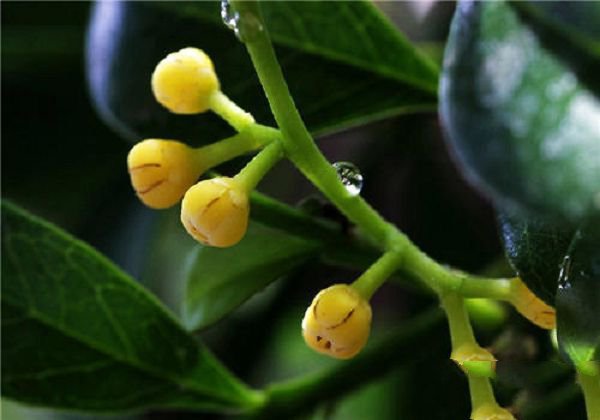
Orange jasmine (Aglaia odorata) is a small-leaved variety of the large-leaved Aglaia, and its scent when blooming is very similar to that of orchids. It is also an excellent courtyard landscape tree, which is why it is so well loved. Cultivating orange jasmine is not very difficult, but growing a beautiful orange jasmine full of fragrance does take some effort.
Orange jasmine
Orange jasmine likes a warm climate, humid air and a sunny environment, but it is not cold-tolerant and is slightly shade-tolerant. Loose, fertile, slightly acidic soil is best. In winter, the temperature is best kept above 10°C. Orange jasmine likes moisture, but watering should not be excessive, otherwise it will cause root rot. The leaves will wither and fall off; too much watering during the flowering period will cause the buds to drop, while too little watering can easily cause the leaves of orange jasmine to turn yellow and dry up. Therefore, when summer temperatures are high, water 1-2 times a day. Spray water on the leaves more often to keep them moist. Fertilizing orange jasmine should also be done appropriately. Orange jasmine blooms many times within a year, and after each bloom, it should be top-dressed promptly 2-3 times with fully decomposed dilute liquid fertilizer, so that it will keep blooming continuously with a rich fragrance. Orange jasmine likes acidic soil, and for pot cultivation, a growing medium based mainly on leaf mold should be chosen. During the vigorous growth period, spray once a week with a 0.2% ferrous sulfate solution, and the leaves will be green and the flowers abundant.
1. Sunlight. Orange jasmine should be placed in a sunny spot in all four seasons. If orange jasmine is placed in a courtyard or on a balcony with ample light and good ventilation, with 8 to 12 hours or more of sunlight per day, the plant will have dark green leaves, thick and strong branches, bloom more often, with bright yellow flowers and a relatively rich fragrance. If orange jasmine is kept in a shaded environment with insufficient sunlight, the branches and leaves will grow leggy and weak, the number of blooms will decrease, and the fragrance will be faint.
2. Watering. Orange jasmine likes moisture, and watering should be determined according to whether the climate is dry or wet. The potting soil should be kept moist but not overly wet for a long time. Too dry is unfavorable for the growth of orange jasmine and causes the leaves to wilt. Maintaining relatively high air humidity is beneficial for the growth of orange jasmine. During dry spells and the vigorous growth period, it is best to spray water on the leaf surface 1-2 times a day.
3. Temperature. Orange jasmine likes warmth, and the higher the temperature, the more fragrant the flowers it produces. Generally speaking, at temperatures above 30°C and under sufficient sunlight, the flowers produced are strongly fragrant; conversely, at temperatures below 30°C, if it is also in a shaded place with insufficient light, the flowers produced are not as fragrant as those at high temperatures. To grow orange jasmine well, the suitable temperature range is between 20°C and 35°C, and from June to October it can bloom as many as 5 times.