What is the most suitable growing temperature for orchids
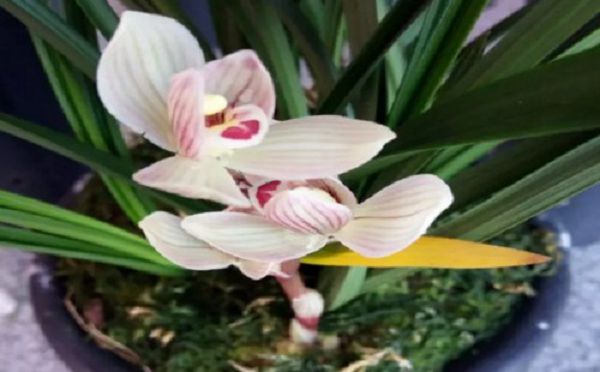
As an ornamental potted flowering plant with high appeal, orchids typically have certain temperature requirements for normal growth. But because there are many varieties, their temperature requirements differ. Generally, epiphytic varieties have poor drought tolerance, so they like to grow in warm environments; terrestrial varieties have stronger cold tolerance, so they like to grow in cooler environments with lower temperatures.
Epiphytic orchid varieties prefer warm growing environments, with Cymbidium bicolor (hard-leaved orchid) as a typical representative. Cymbidium bicolor is commonly found in some low-altitude areas of Yunnan, and if planted in places like Kunming, necessary winter insulation measures are often required for it to survive the winter safely.
As for terrestrial orchid varieties, they generally have stronger cold tolerance, mostly represented by Cymbidium goeringii (spring orchid) and Cymbidium faberi (Huilan). Even after being buried under winter snow, they can generally bloom on schedule the following spring.
At the same time, even for the same orchid variety, due to regional differences, there are obvious differences in temperature requirements. Spring orchids from the Yunnan-Guizhou region can often bloom normally in winter and spring; but when spring orchids suitable for growing in the Jiangsu-Zhejiang area are moved to the Kunming region for cultivation, they instead cannot bloom normally.
The reason is mainly that spring orchids in the Jiangsu-Zhejiang area have adapted to the local cold winter climate, and flower bud formation requires a necessary low-temperature period before they can bloom. After they are moved to the relatively warmer southern region, even in winter, the temperature is much higher than in the north, so flower buds cannot form normally, thereby affecting normal blooming.
The editor, located in the south, once conducted an experiment: original orchid plants grown in the northern region were removed from their pots and the soil clinging to the roots was removed, then the root system was washed clean, wrapped with fresh moist sphagnum moss, and finally the plant together with the root system was wrapped in kraft paper and placed in the fruit and vegetable crisper drawer of a refrigerator. After about one month, they were taken out, and it was found that the orchids showed no signs of frost damage. Then they were potted and planted, and after about half a month, the flower scapes surprisingly began to elongate, and afterward they bloomed normally.
Practice has proven that in most areas of our country, the most suitable growing temperature for orchids is usually between 10-30°C. When the ambient temperature is below 5°C or above 35°C, slow growth will obviously occur, followed by a tendency to enter a dormant state. During propagation and seedling raising, the temperature should preferably be kept between 5-18°C.
It can be seen that temperature has an important influence on orchid growth. But what can be certain is that no matter which orchid variety, if the growing environment temperature is too high or too low, it is unfavorable to plant growth. Especially when grown as potted plants, the temperature must be kept within a suitable range, otherwise it will not only affect flowering, but also reduce the ornamental value of the potted plant.