Is the kapok a flower or a tree? This article will help you get to know the kapok
I. What is the kapok
The kapok, also called panzhihua, red cotton, hero tree, zhangzhishu and so on, is a large deciduous tree belonging to the Malvaceae family (Bombacaceae). Its place of origin is India, and it grows in tropical and subtropical regions. It is between 10 m and 25 m tall, with palmately compound leaves. When it blooms, the flowers are borne singly in the leaf axils at the tips of the branches; the flower color is red, sometimes orange-red, very brilliant, and its ornamental value during the flowering period is relatively high.
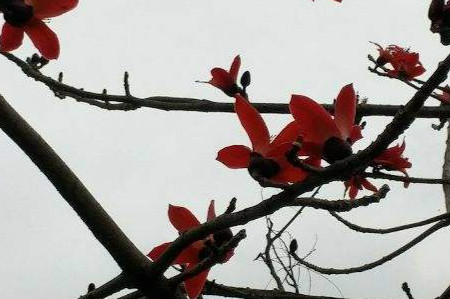
II. Is the kapok a flower or a tree
The kapok is a large deciduous tree of the Malvaceae family (Bombacaceae); it is not a flower but a kind of tree, and the tree body is between 10 m and 25 m tall. It mainly grows in dry-hot river valleys below 1400-1700 m in altitude and in grasslands with few trees, and it is also found in gully monsoon forests; many are also cultivated as street trees. It likes a growing environment with ample light, dry and warm conditions, and it fears waterlogging and low temperatures. When cultivating it, the soil is best loose, fertile, well-drained and slightly acidic; such a soil environment is favorable for its growth.
III. Cultivation techniques for the kapok flower
If it is cultivated in a dry-hot area, it mostly blooms first and then grows leaves, but if it is cultivated under rainforest climate conditions, the flowers and leaves mostly exist at the same time. During the seedling stage it needs a relatively large amount of water, so the soil must be kept somewhat moist, with regular watering, and it must be fertilized once every month. After it reaches maturity, its drought tolerance strengthens, so watering should be reduced, and it should not be watered unless the soil is dry.