How to grow white orchid (Michelia alba)? Care requires maintaining air circulation
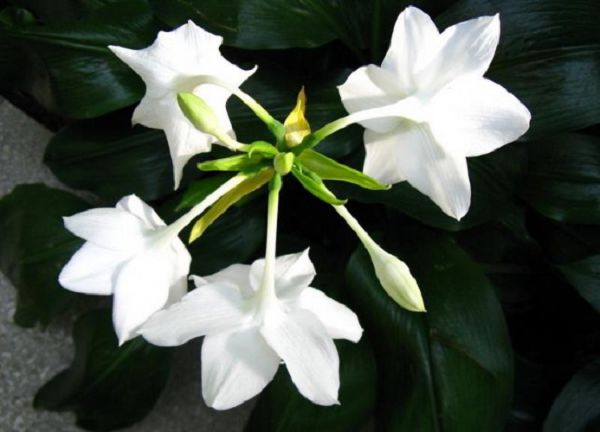
The flowers are pure white and fragrant, blooming between summer and autumn, with a long flowering period and deep green leaves. It is a famous ornamental tree for gardens, often planted as a street tree. The flowers can be used to extract essence or scent tea, and can also be processed into extract for medicinal use, with effects such as promoting qi flow and resolving turbidity, and treating coughs. So how is white orchid cultivated? What good methods are there in cultivation? What must be paid attention to when cultivating white orchid? Let's take a look together below.
Planting methods for white orchid (basic knowledge):
Best growing soil: For home potted white orchid, soil that is loose, highly breathable and rich in humus should be chosen for cultivation. Usually use well-breathable clay pots, purple clay pots (tubs) or plastic pots with more bottom holes. The soil in the pot should preferably contain a certain amount of granular soil of varying sizes, to facilitate water drainage and air permeability.
Growing humidity requirements: Maintain air circulation and keep the pot soil moist to overwinter safely.
Best growing temperature: Keep the indoor temperature above 12 degrees during the day and no lower than 6 degrees at night, otherwise it is prone to low-temperature cold damage.
Best growing light: Move outdoors around the start of summer, place in a sunny and ventilated spot, with sunlight of more than 6 hours. Only with sufficient light can it grow well; insufficient light will cause leggy branches and leaves, fewer flowers or even no flowers.
Precautions for cultivating white orchid:
Fertilizer application: During the vigorous growth period of white orchid (usually June or July, or July or August each year), apply flower fertilizer to the white orchid about once every half month, or apply a small amount of nitrogen, phosphorus and potassium compound fertilizer at intervals of about 20 days, 2 grams to 6 grams each time.
Watering key points: White orchid should not be watered too frequently or excessively. The correct watering method should be: moisten the soil in the pot thoroughly in one go, and when the soil in the pot is slightly dry, there is no need to water. Remember not to water every day, but you can often spray water on the leaves with a small spray bottle. In summer, water thoroughly no fewer than three or four times a month (plus spraying water on the leaves).
Pruning essentials: Before bringing indoors, cut off dead branches, diseased branches, leggy branches and overly dense branches, to minimize the nutrient consumption of the plant; when moving outdoors, appropriately remove old leaves at the lower part of the branches, which helps promote new branches.
Pot soil replacement: According to the size of the white orchid's crown and the length of its age, replace with a pot or tub of appropriate size, to facilitate vigorous plant growth. A small amount of loose soil should be placed in the new pot (tub) in advance, then water thoroughly, and it will be stable once planted.
Propagation key points: Commonly propagated by layering and grafting.
Ordinary layering: Layering is best carried out in February to March. Cut halfway into the base of the branch to be layered, then cut upward another section, insert a piece of tile in the middle, then gently press it into the soil without breaking it, insert a U-shaped thick iron wire into the soil to fix it and prevent it from tilting up, then pile soil on top. Layering in spring, once root buds emerge it can be cut off and planted separately.
Air layering: Before the start of the dog days, select healthy and disease-free tender branches on the mother plant (1.5-2 cm in diameter), cut a slit at the lower part of the fork, then cover with a bamboo tube or bottomless clay pot, fill it with nutrient soil, tie it tightly outside with fine string, being careful not to disturb it, frequently spray a small amount of water to keep it moist, and around May of the following year new roots will grow, then remove and plant in place.
Approach grafting: The time for approach grafting is from spring to autumn, and it can be carried out throughout the entire growing season. It is mostly done from April to July. The best grafting position is 70 cm from the ground. After binding, wrap with a mud ball and wrap the outside with leaves to prevent rain from washing it away, and after about 60 days it can be cut off. Approach grafting is a method that is relatively easy to survive, but it does not grow as vigorously as cut grafting.
Cut grafting: In mid-to-late September, select well-developed magnolia branches as scions. The cut surfaces of the rootstock and scion should be tightly joined, bound with plastic film strips, smeared with mud, and the scion buried with soil to keep the soil moist. In northern China, the scion needs to be covered with straw and the like in winter, and the covering removed the following spring. After sprouting, keep 4-5 buds on the upper part of the branch, and all other buds should be removed. Through 2-3 years of routine care, it will be able to bloom.
Pest and disease control: White orchid needs attention to aphids and other pests harming tender branch tips, and must be controlled promptly.
Cultivating white orchid in water and soil:
White orchid in water: White orchid is a plant that can be grown in water, highly ornamental, relatively easy to cultivate, and can purify indoor air. In the early stage of water cultivation of white orchid, pay attention to changing the water promptly and pruning the roots. After rooting, pay attention to details such as light, water and temperature.
1. Ensure sufficient light
2. Fertilize once a month
3. Water quantity control and choice of water
4. Prune the roots promptly
5. Ensure a suitable temperature for growth
Experience in cultivating white orchid:
How to grow white orchid: First of all, white orchid likes an environment with sufficient light, warm and humid conditions and good ventilation. It is not cold-tolerant, not shade-tolerant, and also fears high temperatures and strong light. It is suitable for well-drained, loose, fertile, slightly acidic soil, and most fears smoke, typhoons and waterlogging. Understanding all these is the key to growing white orchid well. In southern China, under suitable temperature conditions, it blooms continuously all year round.