How to grow a clivia? A full breakdown of growing methods and precautions
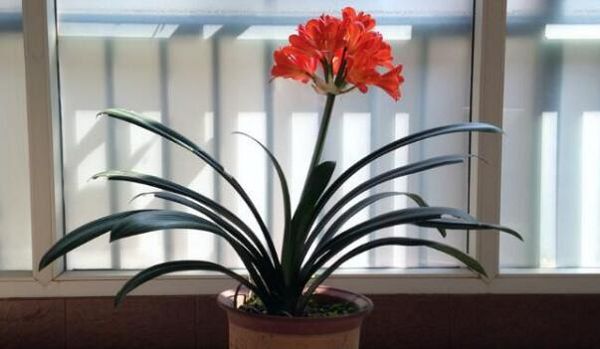
As an indoor potted plant, the clivia has a beautiful and elegant appearance and is highly ornamental. It also has decent air-purifying ability and medicinal value, and it is loved by many people for indoor growing. However, we all run into some problems when growing clivia. Let the Money Tree Home introduce them below.
Clivia growing methods
Soil requirements
In this regard, soil is also the most important part of growing clivia. Clivia likes soil rich in humus, very fertile, and with good air permeability and water permeability, suitable for the breathing of clivia roots. We can mix some fine sand and gravel into the soil used for growing clivia, which is more beneficial to the growth of clivia; a ratio of about 50 percent is enough.
Light requirements
For growing clivia, light is also indispensable. As a plant with intermediate day-length requirements, clivia's most suitable light condition is half shade and half sun. Build a shade shed for the clivia, preferably with a perforated shading material, which can both block sunlight and still give the clivia sunlight exposure. In summer, pay attention to protecting the clivia from heat, and in winter, pay attention to protecting it from freezing. 15-25°C is the most suitable temperature for clivia.
Fertilizer requirements
Fertilizer is very important for clivia. In this regard, clivia likes fertilizer, but there should not be too much fertilizer, otherwise it will also affect the growth of clivia. In spring and autumn, apply solid fertilizer once a month and liquid fertilizer once a week, mainly nitrogen fertilizer. In summer and winter, there is no need for topdressing, or just fertilize once in winter, mainly with potassium fertilizer and phosphorus fertilizer.
Watering requirements
No matter what kind of potted plant you grow, you need to pay attention to watering. Plant growth cannot be separated from water. Clivia has well-developed fleshy roots that can store more water and have a certain drought tolerance, so clivia should not be watered too frequently. Water again when the surface of the potting soil looks dry. Under normal circumstances, water once every 3–5 days in winter, once every 1–2 days in spring and autumn, and appropriately increase the watering frequency in summer.
Precautions
In spring, watch out for wind
In this regard, each season has points to note when growing clivia. In spring, after winter dormancy, the root system of clivia begins to revive. Due to the lack of nutrient supply, once exposed to wind and sun, the leaves will show dehydration. It is recommended to apply fully decomposed liquid fertilizer once a week or once every half month. Never apply concentrated fertilizer or raw fertilizer, so as to avoid leaf scorch and root rot.
In summer, watch out for sun exposure
Because clivia is a plant with intermediate day-length requirements, it is not strict about light, likes half shade, and fears direct light. Due to the higher air temperature and soil temperature in summer, it is easy for the root system to become disordered, leading to unbalanced nutrient absorption and causing phenomena such as a stretched neck and leaf bolting. Therefore, special attention should be paid to light in summer. Placing the clivia in the sun for 3~5 hours is enough, and shade should also be provided.
In autumn, watch out for rain
When autumn begins, the climate gradually turns cooler. During days of continuous autumn rain, adult clivia has more opportunities to cut the scape and set seeds, and to send up the scape and bloom. If it is exposed to rain or watered too much at this time, it will lead to phenomena such as root rot, scape rot, and heart rot. Therefore, when the scape is sent up and blooming, do not spray water. About every half month, water once with decomposed cake fertilizer water, and do not let rainwater pour into the leaf cluster, so as to avoid rot of the core.
In winter, watch out for low temperatures
In winter, when the clivia is at a low temperature below 5°C, the potting soil must be kept at a humidity of about 70%, so that it will not be frostbitten due to dryness. If the moisture is less than 20%, it is prone to dry freezing and death. Therefore, pay attention to freeze protection and warmth retention. About every half month, the potted plant can be turned 180 degrees to help the leaves grow neatly and beautifully.
Summary: The above content is a detailed introduction to this topic. It is hoped that through the introduction of the above content, it can help us grow clivia better.