Remedial measures for orchid leaf fertilizer concentration being too high
In the actual care of orchids, besides supplying the plant with an appropriate amount of water, reasonable light, and good ventilation and humidity conditions, a reasonable supply of fertilizer is also essential.
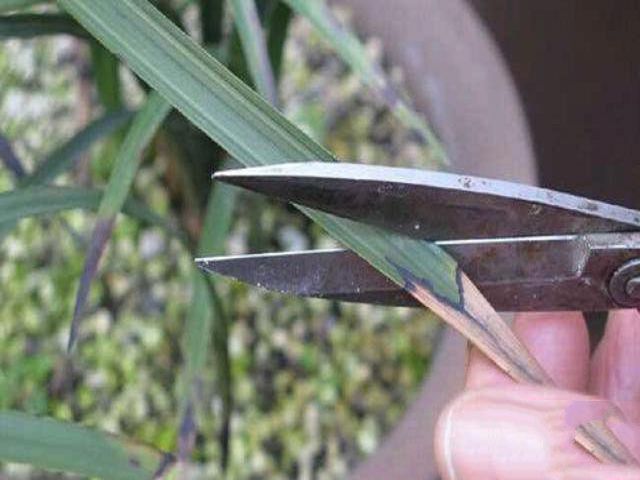
If the concentration of the foliar fertilizer sprayed on orchids is too high, it will inevitably cause burns to the orchid leaves, and especially the leaves of immature orchid seedlings that are still growing are more easily damaged. When orchid leaves are burned due to too high a concentration of foliar fertilizer after spraying, it often shows up as water-soaked spots on the orchid leaves, or as scorched edges and scorched tips. Once this situation is discovered, it is 100 percent foliar fertilizer damage. Pruning work on the injured leaves should be carried out immediately, cutting off the injured parts of the leaves showing symptoms, and continuously spraying water on the plant's leaves to dilute them, washing away the concentration of the residual fertilizer liquid, while at the same time increasing the ventilation of the plant's growing environment. When necessary, add a fan after spraying water to prevent water from remaining in the heart leaves for too long and causing the heart leaves to rot. After several continuous sprays of water for washing, the residual fertilizer liquid on the leaves is quickly diluted and rinsed clean, and basically will not cause the leaf fertilizer damage to continue spreading. The plant will then slowly recover its vitality.
In the daily management and fertilization operations for orchids, there are usually three fertilization methods. First, spreading slow-release granular fertilizer on the pot surface; second, watering the plant with some dilute liquid nutrient fertilizer; and third, spraying some dilute liquid fertilizer on the leaves. If slow-release granular fertilizer is spread on the pot surface, orchid fertilizer damage generally will not occur. As for the nutrient solution watered on the pot surface, when a fertilizer liquid with too high a concentration or undecomposed organic fertilizer liquid is used, orchid fertilizer damage will also often occur, but this kind of fertilizer damage often injures the orchid's root system. This kind of fertilizer damage to the root system is even harder to detect. Once the orchid root system suffers fertilizer damage, by the time it slowly shows up on the leaves, it is often already several days or even more than ten days later. This kind of fertilizer damage to the root system is generally beyond saving.
Therefore, when orchid growers water the orchid plants with nutrient solution or spray it on the leaves, the concentration of the nutrient solution must not be too high. When watering with organic nutrient solution, it can be controlled at more than 1:50; when spraying on the leaves, it can be controlled at around 1:70. When watering with chemical water-soluble fertilizer nutrient solution, the concentration can be controlled at around 1:800-1200. When spraying, it can be controlled at around 1:1200-1500. Always follow the principle of preferring dilute over concentrated, and applying thin fertilizer frequently.