What to do when all the rotten roots of a potted clivia have been cut off
As a common flowering potted plant, the clivia is surely familiar to gardening enthusiasts and has always been deeply loved by them. However, problems are inevitable when growing clivia. Take one gardening enthusiast who had grown a pot of clivia for many years; improper care over time caused the clivia to develop root rot, and it was quite severe.
For clivia root rot, in very serious cases, the rotten root parts are usually cut off and then the plant is replanted. With luck, it can be saved. The whole process is recorded below for gardening enthusiasts to refer to.
What to do about clivia root rot 1. Preparation
The first step is to prepare the tools for performing "surgery" on the clivia, such as scissors, a utility knife, gentian violet, pure river sand, a flower pot and other materials needed for the cutting process, all of which should be prepared in advance.
2. Removing from the pot
First move the potted clivia with rotten roots to an open, shady spot, away from direct light. First use a shovel to dig out some of the soil in the pot, then pat around the sides and bottom of the pot to loosen the soil as much as possible.
Then tip the pot on its side, hold the plant with one hand and grip the rim of the pot with the other, and slowly push the pot backward, without using too much force, to avoid tearing the plant. In this way, the plant can be easily removed from the pot.
3. Pruning the rotten roots
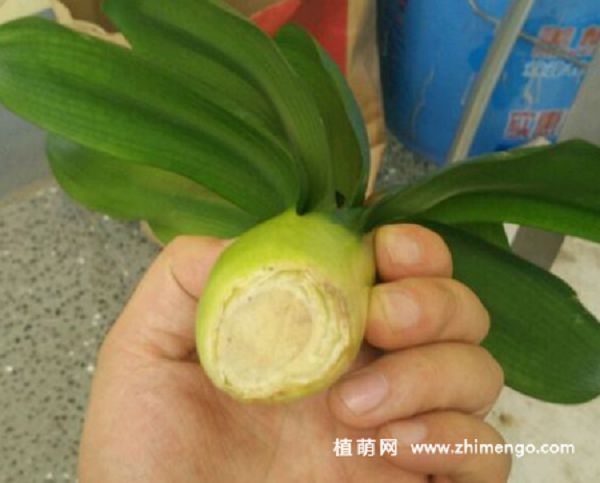
First wash the root system of the clivia removed from the pot and clean off the soil, then check for rotten roots. This pot's roots were quite badly rotted, and it felt like there was no way to trim them. So all the roots at the bottom of the plant were cut off. Let's see whether the cutting was a bit too much.
In order to revive the clivia, the entire root system could only be cut off. Not only did the rotten roots have to be cut off, but some of the leaves at the bottom of the plant also had to be pulled off, especially the soft and yellowing leaves.
4. Disinfection
Next, take the prepared gentian violet, use a transparent container, add an appropriate amount of gentian violet, and soak the rootless clivia in the solution. Of course, you can also apply gentian violet to the cut ends of the clivia's roots. After applying the gentian violet, place it in a cool, ventilated place and wait for the cuts to dry.
Once the cuts have dried, it can be replanted.
5. Planting process
It is recommended to use pure river sand for planting, and the river sand should be washed clean and kept slightly moist. You can first use pure river sand to wrap the clivia's roots well. Then place it in the flower pot, and then fill in the soil, filling it all the way up, and keep the clivia plant stable.
This completes the replanting of the clivia. Whether it can grow roots depends on whether you have good luck. After replanting, new roots can grow in about 20-30 days. Then it is up to time; there is no point in rushing, just do your part well.
6. Care after planting
After planting the clivia, the river sand should be kept at a certain humidity, not too dry. If it is too dry, it may rot again, so replenish water and retain moisture in time, and spray a little water when it dries out.
Since the clivia has no roots, do not put it in direct light. Keep it in a ventilated, shady place and give it appropriate scattered light.
I really do not want this clivia, grown for many years, to die. I hope that through the above rescue methods, it can be revived.