Can a Clivia survive and be planted without roots? Three steps to teach you how to plant Clivia properly
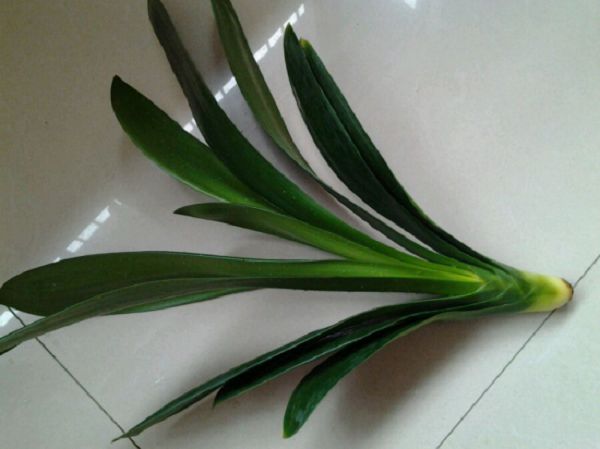
Clivia is a plant that can purify the air, and its leaves are emerald green and its plant shape is very beautiful, so many people keep it at home for viewing. So can a Clivia survive and be planted without roots? Many flower lovers may think this is nonsense, but can it really survive without roots?
1. A Clivia can survive and be planted without roots
In the view of many of us, a plant cannot do without its roots, stems, and leaves. The root system is an important part that maintains plant growth. Without roots, how would the leaves absorb nutrients? So there is no need to even talk about whether it can survive without roots. Sometimes, because the root system rots, we have no choice but to cut off its roots. So after cutting them off, can it still survive?
1. Clean the roots
In fact, even if the roots of a Clivia are gone, if it is carefully cared for, it can still grow new roots and then survive. If we cut off the roots after the Clivia's roots rot, at this time we must thoroughly remove the rotted parts.
2. Disinfect
Then we mix a carbendazim solution with water at a ratio of 1:2000, and soak the bulb part in it for about 30 to 40 minutes, so as to completely disinfect its roots and prevent further rot. After disinfecting, place it in a ventilated place to dry.
3. Planting
After drying, use potting soil made of sawdust, sand, and vermiculite. First spray a small amount of water into the potting soil, then wrap the bulb part of the Clivia with sawdust and bury it in the potting soil. Put it in a cool and ventilated place, and use the watering method of watering when dry and letting it stay wet in between. However, never pour water onto the leaf core, as this can easily cause heart rot, and then the problem some flower lovers mention of how to prevent potted Clivia from developing heart rot will not occur.
In this way, new roots will grow in about 20 days, and then we can carry out normal care according to the usual methods of caring for Clivia. So, to the question flower lovers have of whether a Clivia can survive and be planted without roots? This is not nonsense; a Clivia can also survive and be planted without roots.
2. Water thoroughly to avoid root rot
When we usually grow Clivia at home, in fact, as long as we pay a little attention to some of the care methods for Clivia, root rot will basically not occur. Especially in the high-temperature season of summer, so in summer we should pay even more attention. So how should Clivia be cared for in summer?
Because of the high-temperature weather in summer, we ourselves all need to drink water often, so many flower lovers also water the Clivia multiple times. In fact, this method is not advisable. Clivia is most afraid of water accumulation. If we water too many times, it will cause water to accumulate in the potting soil, and then the roots will definitely rot because of too much accumulated water.
So in the high-temperature weather of summer, we only need to move it to a cool and ventilated location, and then maintain the principle of not watering when not dry and watering thoroughly once we do water. If the rainy season comes, we should also promptly drain the accumulated water from the potting soil, so that Clivia root rot can be avoided.
3. The Clivia symbolizes extraordinary bearing
In feng shui, plants have always had an irreplaceable feng shui role, and as a kind of potted plant that the broad masses like, what is the meaning of placing Clivia at home? The flower language of Clivia has the meaning of nobility, symbolizing the noble character of being strong and resolute and unyielding. So placing it at home can also show the host's extraordinary bearing.
In terms of the five elements, Clivia is an herbaceous plant and belongs to wood, so it is very suitable for people whose fate lacks wood in the five elements to place it at home as a potted plant. In this way, the wood-belonging Clivia can fill the host's five-element gap of lacking wood, balance the feng shui at home, and bring a stable living environment.