Is the Brazilian iris an orchid? Understanding its true identity in one article
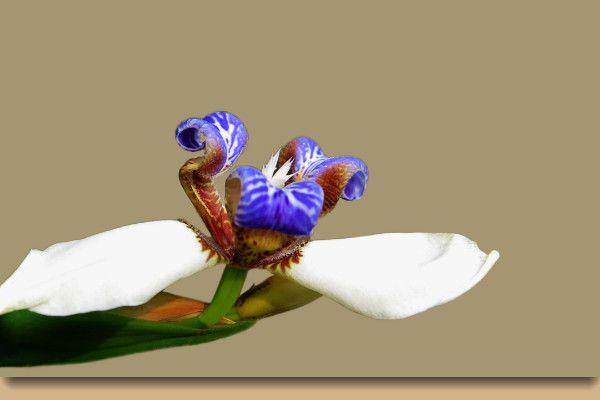
The Brazilian iris is not an orchid variety, but a separate perennial herbaceous plant in the Iridaceae family. Its plant form may look similar to orchids, but do not confuse the two. The plant grows relatively tall, and its flowering period can last from April to September. It has strong developmental adaptability, prefers to grow in warm and humid environments, and is commonly propagated by division.
1. It is not an orchid
The Brazilian iris does not belong to the orchid varieties. It is a perennial herbaceous plant in the Iridaceae family and belongs to the separate genus Neomarica. It may look quite similar to orchids in appearance, but do not lump it together with orchids. Each variety, when considered independently, has its own characteristics.
2. Plant form
The Brazilian iris plant can reach a height of 40-50 cm. Its leaves grow in a fan-shaped arrangement, and its flowering period lasts a relatively long time, from spring to summer. The flowers usually open in the morning and begin to wither and fade at 3-4 pm. The flower color is mainly white, paired with red-brown or purple-brown basal markings.
3. Growing environment
The Brazilian iris has strong growth adaptability. It can develop under full sun, partial sun, or diffused light. It usually grows better in areas with loose, moist soil. In terms of temperature, attention should be paid to the damage caused to the plant by low-temperature environments, which affects the growth rhythm of the Brazilian iris.
4. Propagation method
The cultivation of the Brazilian iris usually uses division for propagation. Division is suitable in spring, summer, and autumn. By guiding the young plantlets on the flower stems to the soil surface, they can take root and become new plants. After division, regularly remove old leaves and yellow leaves, and also carry out maintenance measures such as fertilizer application and watering.