A Detailed Guide to Transplanting and Creating White Orchid (Michelia alba) Bonsai
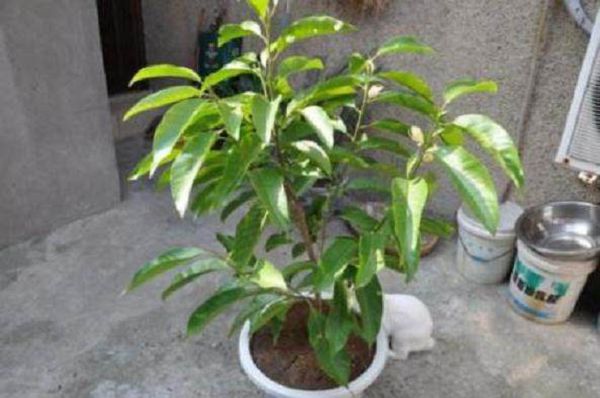
How to Create White Orchid Bonsai
White orchid, also called huangjulan, usually appears as a fairly tall tree, but this tree also has dwarf varieties that likewise bloom, with flowers as white as snow. If the temperature is suitable, it will keep blooming over a long period, richly fragrant and beautiful. White orchid bonsai has a graceful tree form, emerald-green leaves, snow-white flowers, and a fragrance like that of a secluded orchid. In northern regions it is mostly made into stump bonsai for appreciation.
As an ornamental flower, the white orchid is very endearing, and grown as a bonsai it also looks elegant and dignified. So how is white orchid bonsai made? Today the editor will introduce the method for creating white orchid bonsai.
1. Obtaining Seedling Sources
White orchid can be propagated into young plants by sowing seeds, cuttings, layering and other methods. Here we take sowing as an example. First prepare fertile, loose soil with good drainage; slightly acidic sandy culture soil is most suitable. Then directly scatter white orchid seeds that have undergone seed soaking and germination treatment onto the culture soil. Finally, evenly cover the seeds with a layer of river sand, then water once thoroughly.
2. Transplanting Seedlings
When the grafted seedling grows to about 8-10 cm and has more than two true leaves, it can be transplanted into a nutrient pot for normal cultivation. The nutrient soil is mixed using sawdust, soil and organic fertilizer. When transplanting, first gently pull out the grafted seedling, then soak it in a plant gene activator for about half a day, then plant the young plant into the nutrient pot, and finally water once to settle the roots. After completing this, place it in a spot where it can receive scattered light for care.
3. Cultivating Seedlings
Two to three months after the seedlings are transplanted, we can gradually increase nutrients for them by fertilizing, but generally apply liquid fertilizer once a week. For watering during the seedling cultivation stage, generally consider the weather conditions as appropriate: when the weather is dry and hot, water more, keeping to 2-3 waterings per day; if the weather is relatively cool and the humidity is suitable, water once a day.
4. Grafting Young Plants
When the young plant has been transplanted for half a year, grafting can be carried out, mostly in the summer of the second year after transplanting. At this time, the young plant has basically grown to a height of more than 30 cm, which is very suitable for grafting. Either cut grafting or bud grafting can be used, and this is basically the same as the grafting methods for other types of nursery stock. However, for grafting, vigorous yellow magnolia (Michelia champaca) seedlings can be used as rootstock, so that the grafted nursery stock heals its wounds faster and is more likely to survive.
5. Pruning and Shaping
After the young plant has grown for 2 years, we can prune and shape it at the appropriate time to create a bonsai. In spring, when the tree begins to sprout, as new shoots and new branches keep growing, we can carry out wiring at the appropriate time according to its growth condition, bending it into a curved state to artificially control the growth height of the trunk, and at the same time also let the branches grow according to our intended design, making it better fit the characteristics of a bonsai tree. Of course, in the shaping process it is also necessary to combine pruning methods, cutting off branches that are not conducive to the shape and improving the ornamental value of the bonsai.