How to save a clivia with root rot? Cut off the rotten roots, and it can also grow roots in water
As the weather gets hotter day by day, it is hard on flower growers. Summer is a tough season for succulents and potted flowers; with the slightest carelessness, root rot can occur. One flower grower had a clivia that, for no apparent reason, developed root rot.
There was no other way. Since the roots had rotted, they had to be dealt with. Worried that soil culture would cause it to rot again, the grower tried water culture instead, and unexpectedly the roots grew quite quickly in water. The whole process is shared below.
How to save a clivia with root rot 1. Preparation
Since the roots have rotted, first prepare the materials for dealing with the rotten roots, such as a utility knife, carbendazim, clean water, a washing basin, a container for water culture and other materials, which should be prepared in advance.
2. Removing the plant from the pot
Before cleaning up the rotten roots, first remove the plant from the pot, that is, dig the clivia with rotten roots out of the potting soil. Generally, first pat around the flower pot and the bottom of the pot to loosen the soil a bit, making it easier to remove the plant from the pot.
Then dig away the surface soil without damaging the plant. When half of it has been dug away, you can tip the flower pot onto its side, hold the plant with one hand, and then gently push the flower pot backward, so the plant can be easily removed from the pot.
3. Cleaning and pruning the rotten roots
After the clivia is removed from the pot, first clean off the soil from the roots, rinse the roots with clean water, and use a sterilized utility knife to cut off the rotten roots one by one. During the cutting process, do not be reluctant; be ruthless and cut off the rotten roots all at once. If the rotten roots are not cut cleanly, secondary rotting will occur.
4. Disinfection
After all the rotten roots of the clivia have been cut off, take a basin, add some clean water, add a few drops of carbendazim, stir evenly, soak the rotten roots in the solution for 10 minutes, then take them out and place them in a cool place to drain off the water.
5. Preparing the water culture container
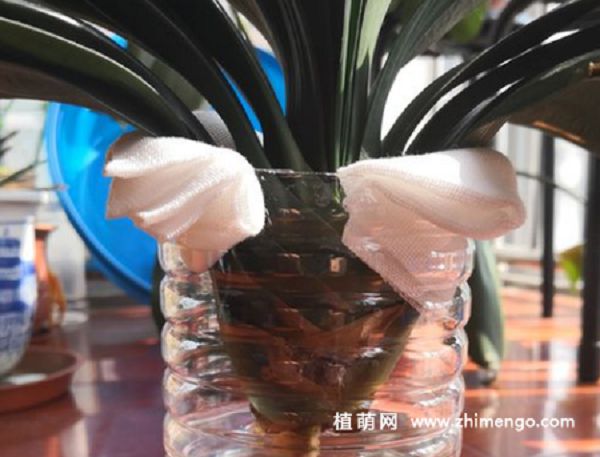
At the time, the grower was in a hurry, so the water culture container used was a mineral water bottle, but the mineral water bottle was cut in the middle, and it just happened to hold this clivia. However, it is recommended that flower growers with the conditions use a transparent glass container. The mouth of the container should not be too small; a slightly larger mouth can hold the clivia plant.
6. Water culture process
Once the water culture container is ready, add clean water to the container; add only half the clean water. Then bring the clivia over and place it into the container, so that the roots of the clivia slightly touch the water surface. To make it easier to adjust the contact between the roots and the water surface later, it is recommended to make a partition layer, which makes it easier to control the contact between the roots and the water surface.
You need to know that the roots cannot be inserted directly into the water, otherwise rotting will occur. Here, a few pieces of cloth were just added along the edge of the mineral water bottle as padding to avoid damaging the plant, and at the same time it could also control the contact between the roots and the water surface, so it was made do with in this way.
After water culture, the water culture container can be placed in a ventilated and cool place. The environment must be well ventilated. Then wait patiently for roots to grow. Generally, in 2-3 weeks, tender white roots will be seen emerging.
The above is the whole process of dealing with clivia root rot, from removing the plant from the pot, cleaning, pruning the rotten roots, to water culture. It is hoped that this process will be helpful to flower growers.
Of course, when growing clivia, try to avoid rotting. The following points should be grasped well.
How to avoid root rot 1. Unsuitable environment
If the ambient temperature is high, the humidity is high, and the ventilation is poor, such an environment very easily causes the fleshy roots of clivia to rot, especially in summer, when it is not only hot but also stuffy.
Therefore, in summer, keep the environment as well ventilated as possible, and when necessary, use a fan to strengthen air circulation.
2. Overwatering
If you water the clivia whenever you have nothing to do, when the potting soil has too much moisture and drainage is not timely, the fleshy roots of the clivia will be soaked for a long time, which will also cause the roots to discolor and rot. Therefore, daily care should control watering, and watering should be based on the dryness conditions.
3. Flower pot selection
If the flower pot has poor air permeability, it will also cause clivia root rot. When growing clivia, avoid using ceramic pots and plastic pots; try to use ceramic pots and clay pots. In addition, place some granules at the bottom of the flower pot to facilitate air and water permeability.