How to Care for Crab Claw Orchid During the Flowering Period and Points to Note
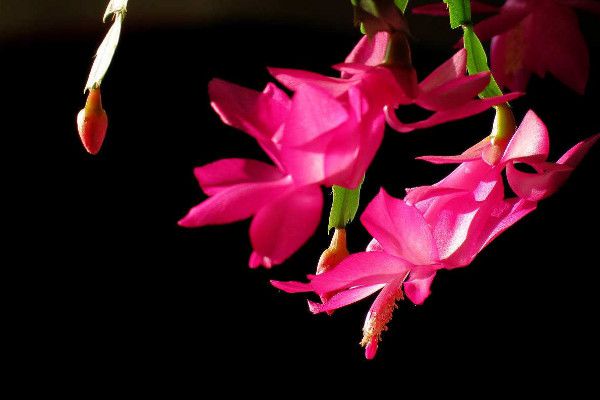
During the flowering period, the crab claw orchid (Schlumbergera truncata) should have watering reduced and fertilizing stopped, with the water amount kept moderate; continuing to fertilize will cause the buds to drop. The temperature should be kept between 15 and 20°C, and light should also be supplemented during the flowering period. Place the crab claw orchid in a ventilated environment to prevent pests and diseases, and at the same time prune rotten flowers and empty buds lacking nutrients to avoid loss of nutrients.
1. Reduce watering and stop fertilizing
The flowers are quite delicate when in bloom and are relatively sensitive to the addition of water and fertilizer. Watering too much or too frequently, or spraying water onto the flowers, will cause the flowers to drop, while a lack of water will cause the flowers to look dull and lusterless. Before the buds appear, a light fertilizer can be applied frequently and sparingly to promote growth, but once the buds have formed, fertilizing must be stopped, otherwise the buds will very easily drop.
2. Keep warm and increase light
The temperature during flowering is best kept between 15 and 20°C, which is more suitable; a warm environment allows the crab claw orchid's buds to bloom normally and makes the flower color richer. The plant itself needs light for nourishment, and light should also be supplemented during the flowering period, otherwise unsuitable light will cause the flowers to drop prematurely.
3. Ventilation and air permeability
In addition to keeping warm and increasing light, the crab claw orchid needs to be placed on a balcony or windowsill with good ventilation. First, this ensures that the flowers can breathe fresh air during the blooming process; second, it also prevents the invasion of diseases and pests. A ventilated environment has a notable deterrent effect on diseases and pests.
4. Light pruning
Although the flowers are relatively delicate during the full flowering period, light pruning is still needed. Pruning during the flowering period mainly targets flowers that have already died and rotted and empty buds lacking nutrients. Pruning them in time ensures that nutrients are not spread out and lost, allowing the healthy flowers to absorb more nutrients.