How to raise newborn piglets? Pay special attention to these points
In rural areas, even without running a pig farm, many rural households raise a few pigs, so that they can be used to host family during the New Year and can be sold when the live pigs are ready for market, increasing profits. Although many people choose to buy breeding pigs at the start of farming to improve their own economic returns, if they want to raise pigs over the long term, then breeding their own piglets is certainly the most appropriate approach.
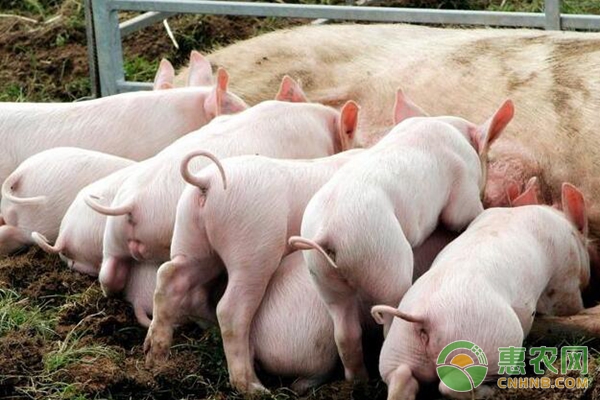
You should know that buying piglets costs between 200 yuan and 300 yuan, which is relatively high. So if you can let your own pigs breed, with more than a dozen per litter, then it is very beneficial for reducing your own breeding costs and increasing annual output value. The month after a pig gives birth is very important for caring for the piglets. So how should we manage these suckling piglets?
First, we must ensure that newborn piglets can drink colostrum immediately
Generally, newborn piglets refers to the period from the moment they are born to one month afterward. Why is colostrum so important? It is just like with humans. Colostrum contains rich nutrients, and you should know that the microorganisms in colostrum are all specific, which is different from formula milk.
So if piglets drink this colostrum, it can greatly improve their immune capacity and enhance their disease resistance.
Second, we must do a good job of cold protection and warmth for the piglets
At this time, because the piglets have just left the mother's body, they are very sensitive to cold. Therefore, within one month, piglets at different stages need different temperatures.
For piglets from 1 to 3 days old, we should maintain the indoor temperature at preferably 30 to 32°C. After 4-7 days, we can ensure their temperature is 28 to 30°C. After 8 days, we can gradually reduce their temperature to about 22 to 25°C. Then after one month, we only need to maintain room temperature.
Third, for newborn piglets, we must prevent the sow from developing yellow and white dysentery
This kind of yellow and white dysentery in piglets is mainly an acute infectious disease caused by Escherichia coli. So if this disease is not treated promptly, it can very easily cause the death of piglets. This disease is also a common diarrheal disease in piglets during the suckling period.
The main manifestation is that the feces passed by the piglets are yellowish, and the piglets have a low milk intake, and in severe cases it can even cause dehydration and fainting.
Therefore, for this disease we must combine prevention and treatment. So-called prevention means improving the care of newborn piglets and the cleaning work for sanitation. As for treatment, we can use some Chinese and Western medicines together, combining both for treatment.
Fourth, we must promptly start the piglets on feed and supplement them with pellet feed
The most suitable time to start piglets on feed is within 7 to 10 days, which is beneficial to the piglets' growth and development.
Although traditionally it is said that feed can only be supplemented after 20 days, nowadays it is advocated to supplement feed to piglets earlier, but what is fed is commercial suckling pig feed, which has higher nutrients, and some green feed must also be provided. However, when feeding green feed to piglets, make sure the feed is clean, and then provide fresh drinking water.
The above is the care and management of piglets compiled by the editors of Huinong Network. To sum up, we must ensure that newborn piglets can drink colostrum immediately, at the same time do a good job of keeping piglets warm and preventing yellow and white dysentery, and finally promptly start the piglets on feed and supplement them with pellet feed, thereby ensuring the healthy growth of the piglets.