How to cultivate Clivia miniata? Detailed cultivation techniques
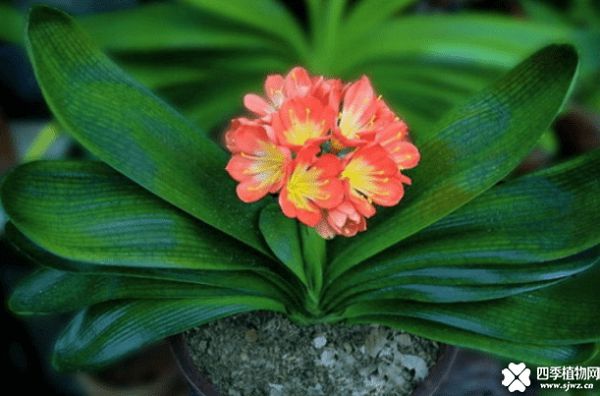
Clivia miniata has a graceful and elegant plant form, with dark green, upright and glossy leaves and bright red fruits; it is an evergreen herbaceous plant whose flowers, fruits and leaves are all ornamental. Clivia miniata is relatively shade-tolerant and is a potted plant and flower very suitable for indoor viewing. It not only beautifies the indoor environment but also has a strong purifying effect on indoor air, and can also absorb dust, dirt and toxic gases from the air, making it an excellent plant and flower well worth growing. So do you know how to cultivate it? Let's learn about it together today.
How to cultivate Clivia miniata?
Cultivation techniques for Clivia miniata
During cultivation, in addition to strictly controlling water, light and temperature, apply a nitrogen fertilizer once every 20 days, commonly using decomposed cake fertilizer water. When topdressing, be careful not to let it touch the leaves, so as to avoid damage. Before Clivia miniata blooms, apply bone meal or superphosphate once, which can make the flower colors more vivid and the flowers larger. With proper cultivation and management, Clivia miniata blooms once a year, or even 2 times. After the flowers fade between April and May, it needs repotting; gently scrape away the stale leaf mold, being careful not to break the fleshy roots, choose a suitably sized pot, and plant it promptly, placing more broken tiles at the bottom of the pot to facilitate drainage.
Cultivation and management of Clivia miniata
The soil used for cultivating Clivia miniata must be carefully chosen; a mixed soil of broadleaf leaf mold, coniferous leaf mold, potting soil and fine sand is best, with a loose, fertile character that is beneficial to the development of the fleshy roots. The optimum growth temperature is 15-25°C. When the temperature is below 10°C, the plant grows slowly; when the temperature exceeds 30°C, the leaves and flower stalks will become leggy. A temperature difference of 10°C is most favorable for the growth and development of Clivia miniata.
During growth, diffused light is best, which is favorable for flowering and fruiting. On the contrary, too strong light is unfavorable to the plant's growth, development, flowering and fruiting. The soil should be neither dry nor wet, and the air humidity should be 70%-80%. If the soil is too wet or the relative humidity is too high, Clivia miniata is prone to diseases.
Fertilization should be scientific. Clivia miniata is a fertilizer-loving plant; apply sufficient base fertilizer when repotting, and fertilize once a month during the growing season. But when fertilizing, be careful not to stain the leaves, and apply a phosphorus-potassium fertilizer once before the flower stalk emerges.
In winter, Clivia miniata often shows the "arrow jamming" phenomenon in which the small flowers open before the flower stalk has grown out of the pseudobulb. The main reason is that when the flower stalk appears, it is affected by low temperature and low soil water content. As long as the temperature is appropriately raised and the watering amount increased during the flower stalk emergence period, the occurrence of the "arrow jamming" phenomenon can be prevented.