How to grow Clivia? A detailed guide to four-season care techniques
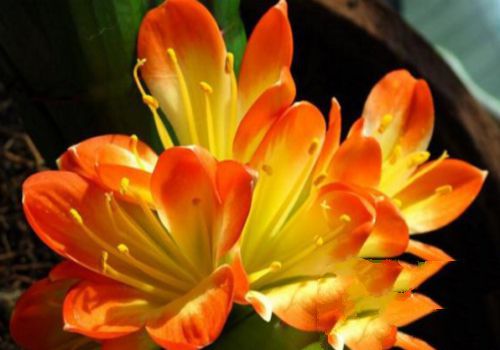
I. Clivia care in spring: watch out for wind.
In early spring, after winter dormancy, the root system of Clivia begins to revive. Due to a lack of nutrient supply, once exposed to wind and sun, the leaves will show dehydration, causing their gloss to fade, and their firmness and thickness to decrease; in severe cases, yellowing and rotting of leaves can even occur.
Therefore, at this time pay even more attention: Clivia is drought-tolerant but not moisture-tolerant, so keeping the potted plant generally moist is enough; too much watering easily causes root rot. Before the flower stalk emerges and blooms, avoid spraying water. Apply fully decomposed liquid fertilizer once a week or once every half month, but follow the principle of "light fertilizer applied frequently," and strictly avoid concentrated fertilizer or raw fertilizer to prevent leaf scorch and root rot.
II. Six major protections for Clivia care in summer
1. Prevent direct sunlight; do not expose to blazing sun
In summer, Clivia should be shaded from strong light all day. Using the slanted sunlight in the early morning for a short while each day is enough to satisfy photosynthesis.
2. Prevent high temperatures; do not let it dry out
The suitable temperature for Clivia in summer is 18°C--25°C. It is best to place it indoors with air conditioning, or in a shaded, ventilated spot on a balcony. When watering, it is best to use tap water that has been left in the sun for two or three days, and water once every day after 6 p.m., not letting the potting soil become too dry or too wet.
3. Prevent leggy growth; do not fertilize
Summer is the dormant period for Clivia, so stop fertilizing, water moderately, and controlling humidity is an effective measure. If the potting soil has been fertilized too heavily or the fertilizer effect is strong, remove the upper layer of soil from the pot, mix in 1/3-2/3 sand evenly, and put it back into the pot; this not only reduces the fertilizer effect but also helps lower the temperature.
4. Prevent dust pollution; do not water with dirty water
The leaf surface of Clivia should be kept clean. Once a week, dip a fine gauze in clean water, wring it dry, and gently wipe once. Watering with dirty water will cause roots and leaves to rot and turn yellow.
5. Prevent soil compaction; do not use clay (loess) in the pot
Clivia is suited to being grown in loose, breathable, water-permeable, fertile humus soil with a pH of around 7.0.
6. Prevent disease; do not let it become infected
When changing the soil or wiping the leaves, move gently to prevent wounds on roots and leaves that release sap, which can trigger infection and cause decay.
III. Clivia care in autumn: watch out for rain and water spraying.
In early autumn, the climate gradually turns cooler. During days of continuous autumn rain, mature Clivia has more opportunities to cut the stalk and set seeds, and for the stalk to emerge and bloom. If it is exposed to rain or watered too much at this time, it will lead to root rot, stalk rot, heart rot, and similar problems.
Therefore, when the stalk emerges and blooms, avoid spraying water. About once every half month, water with decomposed cake fertilizer water (1:3). When watering, prevent water from entering the center of the leaf rosette, and do not let rainwater pour into the leaf rosette either, so as to avoid rot of the core. In severe cases, it can even cause the whole plant to rot and die.
IV. Clivia care in winter: watch out for low temperatures and dryness.
In winter, when Clivia is at a low temperature below 5°C, the potting soil must be kept at about 70% moisture, so it will not be frostbitten due to dryness. If the moisture is less than 20%, it is prone to dry freezing and death.
Before Frost's Descent, indoor plants should be placed in a sunny spot indoors, and attention should be paid to cold protection and warmth. About once every half month, the potted plant can be rotated 180 degrees to help the leaves grow neatly and attractively.
In winter, when the indoor temperature is kept at 6-7°C, it can overwinter safely. Fermented cake fertilizer can be applied once a month, and liquid fertilizer once about every 10 days; note that nitrogen fertilizer should not be applied too much. In the 3 months before flowering, apply liquid fertilizer mainly with phosphorus and potassium fertilizers, which can encourage it to send up a stalk and bloom.