Orchid yellow leaves and leaf dieback: how to handle it? Water and fertilize this way, and turning yellow leaves green is easy
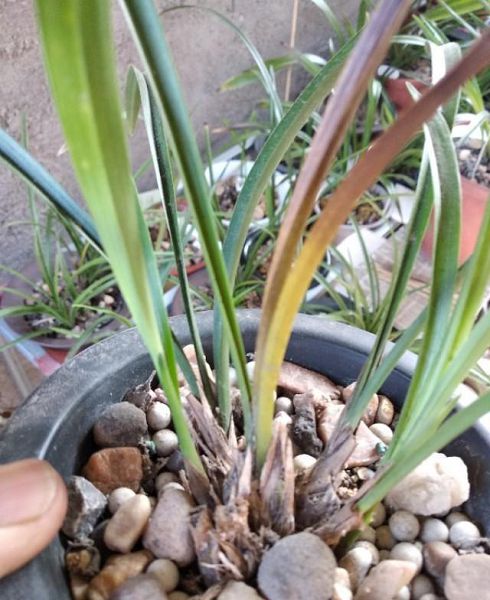
Leaf dieback in Cymbidium sinense is a common occurrence. It usually occurs at a higher rate in spring, during March and April. In fact, it is not only Cymbidium sinense; other orchid varieties also often experience it in spring.
Leaf dieback in orchids usually occurs on two- to three-year-old seedlings or even older plants with a longer seedling age. By rights, this is also normal. For a pot of orchids with a dozen or twenty seedlings, if two or three seedlings die back within two to three years, as long as the dieback rate is not very high, there is no major problem. As long as daily management is strengthened, the dieback rate will be reduced to a minimum. So, what methods can be used to regulate leaf dieback in orchids? We can spray an appropriate amount of foliar fertilizer and chemicals (growth regulators) before the orchids bloom. For example: the flowering period of Cymbidium goeringii and Cymbidium sinense is from November to February or March of the following year. We can, before the orchid spikes emerge, spray twice with potassium dihydrogen phosphate solution (5:1000 concentration) and naphthalene acetic acid dilution (concentration 1:2000 to 2:2000), with an interval of seven to ten days between the two sprays. When spraying, mainly spray the backs of the leaves and the pseudobulbs of the old plants, and avoid spraying into the inner leaf center. This can effectively prevent leaf dieback in old seedlings.
Leaf dieback in old orchid seedlings is mainly addressed through prevention. For old seedlings whose leaves have already turned yellow and withered, simply cut them off and clean them up. This normal seedling dieback phenomenon generally only involves the leaves turning yellow and receding, while the pseudobulb at this time is still alive and still fresh green. So there is no need to worry.
In the daily management of orchids, how well the plants grow is greatly related to watering, light, fertilization, environmental humidity and pest and disease control. However, as far as the leaf dieback rate of orchids is concerned, it is still directly related to fertilization. Whether in online content or in books and reference materials, when it comes to the types of fertilizer used for orchids, most recommend phosphorus and potassium fertilizers as the main type. "Phosphorus and potassium fertilizers as the main type" does not mean that nitrogen fertilizer and fertilizers with other elements cannot be used. Therefore, this has also more or less misled orchid enthusiasts into neglecting the use of nitrogen fertilizer in orchid fertilization. Because orchid plants lack nitrogen for a long time, this is also one of the reasons for the increased leaf dieback rate of old orchid seedlings. Therefore, in daily management, while applying phosphorus and potassium fertilizers to orchid plants, it is also necessary to timely and appropriately add some nitrogen fertilizer. This prevents the conductive tissue of old seedlings from declining prematurely, which would cause leaf dieback in old plants.