When is the flowering season of Michelia champaca? A detailed explanation of its blooming time
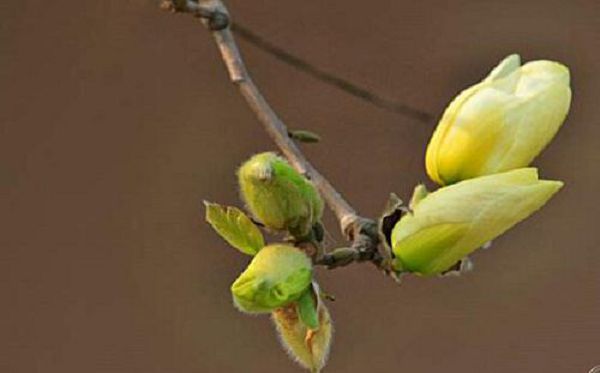
Michelia champaca is an evergreen tree, reaching over 10 m in height; its branches spread upward at an angle, forming a narrow umbrella-shaped crown; the buds, young branches, young leaves and petioles are all covered with pale yellow appressed soft hairs. The leaves are thinly leathery, lanceolate-ovate or lanceolate-oblong, with the underside slightly covered in fine soft hairs. The flowers are yellow and extremely fragrant, with 15-20 tepals. So in which month does Michelia champaca bloom? When is the flowering season of Michelia champaca?
According to experienced Michelia champaca growers, its flowering season is June to July, and its fruiting season is September to October.
Origin and habitat
It is native to southeastern Xizang, China, and southern and southwestern Yunnan, China. It is cultivated in Fujian, Taiwan, China, Guangdong, Hainan and Guangxi; in the Yangtze River basin it is grown in pots and overwintered in greenhouses. It is also distributed in India, Nepal, Myanmar and Vietnam.
Differences from similar species
This species differs from Magnolia denudata in having yellow flowers, a narrow elongated crown, long soft hairs on the underside of the leaves, and stipule scars on the petiole exceeding 1/2.
Growth habits
It is a sun-loving plant and requires ample sunlight. It prefers warm, hot and humid conditions and acidic soil, is intolerant of alkaline soil and drought, and dislikes excessive moisture, especially waterlogging. It is not cold-tolerant, and the minimum indoor temperature in winter should be kept above 5°C. A well-drained, loose and fertile slightly acidic soil is suitable. Its resistance to smoke is poor. The flowering season is June to July, and the fruiting season is September to October. It fruits easily; generally, grafted seedlings 2-3 years old can bear fruit after flowering.
Propagation and cultivation
Propagation is mainly by sowing, though grafting can also be used. The seeds should be collected promptly when the fruit just splits open and the red seeds appear; after collection, store them in sand until sowing in the following spring. After sowing, germination generally begins in about 1 month, though some seeds take nearly 2 months to germinate. Transplanting of seedlings is best done in the evening or on cloudy days; after transplanting, a shade frame should be set up for shading, and the frame should be gradually removed as the plants grow taller. One-year-old seedlings can reach up to 40-50 cm in height, with a crown of up to 40 cm, growing better than grafted seedlings. For grafting, Michelia wilsonii and Michelia chapensis, among others, can be used as rootstock. The cultivation and management of Michelia champaca are the same as those of Michelia alba. The main pest is scale insects, which should be controlled promptly.