How to grow orchids? Cultivation methods and care management tips
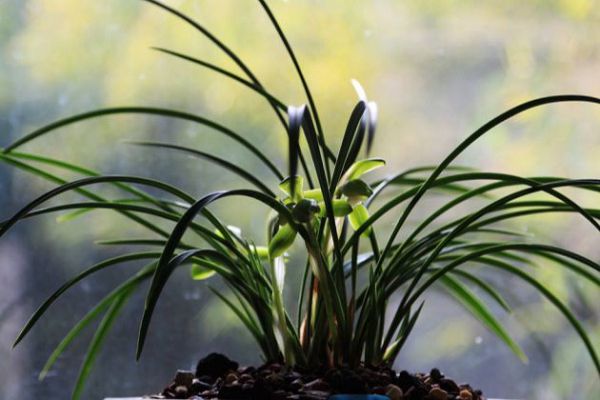
The orchid is one of the many categories of flowering green plants, with common types including the Cymbidium ensifolium, Cymbidium faberi, and Cymbidium sinense. The orchid is one of the top ten famous flowers in China, with a fresh and elegant appearance and extremely high potted ornamental value. Since ancient times, it has been the favorite of many scholars and literati.
Besides its beautiful appearance, the orchid also has important medicinal value, producing a heat-clearing and detoxifying effect, making it a flower of very high economic value. So how do you grow orchids? Today Huar Gu will introduce the cultivation methods and precautions for orchids to everyone.
1. Potting
Growing orchids requires choosing a good flower pot. For growing orchids, it is best to use special orchid cultivation soil. Newly potted orchids do not need base fertilizer added to the soil. For transplanted orchids, you need to let the roots spread out before filling in the surrounding soil and gently firming it. Finally, water thoroughly once and place it in a spot without direct sunlight for care.
2. Watering
Watering is very important in orchid cultivation. Once watered too much or too little, it will lead to poor growth. Depending on the season, orchids have different water requirements. Generally speaking, during the flowering period, orchids need less water. Orchids grown outdoors need to be protected from rain to avoid prolonged water accumulation soaking the roots and causing poor growth. It is best to water orchids in the morning or evening. In summer, watering needs to be increased, and in winter, watering needs to be reduced. Each watering should wait until the soil surface is completely dry before proceeding, to prevent excessive watering from causing disease and also to prevent long-term water shortage from causing dry leaves.
3. Fertilizing
The growth of orchids cannot be separated from a sufficient nutrient environment. If you want orchids to grow well, you must fertilize them in a timely manner. If you want orchids to bloom more and more beautifully, you need to know how to fertilize. Generally speaking, fertilizing orchids should follow the principle of light fertilizer applied frequently. Too much fertilizer will cause fertilizer damage, while too little fertilizer will result in fewer blooms, yellowish leaves, and a thin, weak appearance. Orchids should be fertilized when they begin to grow new shoots; the nitrogen fertilizer used at this time can promote leaf growth. Before the flowering period, some organic fertilizer or phosphorus-potassium fertilizer can be used. Stop topdressing during the flowering period, and topdress promptly after the flowering period. If you are not sure which fertilizer to use, use compound fertilizer. Compound fertilizer has balanced nutrients and is also very good for growing orchids. To judge whether an orchid lacks fertilizer, observe its leaves. When the leaves turn yellow, it lacks fertilizer. When the leaves are overall dark green, the nutrients are sufficient, and no topdressing is needed at this time.
4. Environment
The environmental requirements for growing orchids are relatively high. The environment must be well ventilated; otherwise, diseases will occur frequently. As the seasons change, we need to promptly move them to a place with sufficient scattered light for growth, avoiding direct strong light and also avoiding long-term cultivation in dark places. In winter, pay attention to cold protection and warmth. Orchids grown outdoors should be moved indoors for warmth. Too low a temperature will cause cold damage.