How Many Years Does a Tissue-Cultured Orchid Take to Bloom? A Detailed Explanation of Blooming Time
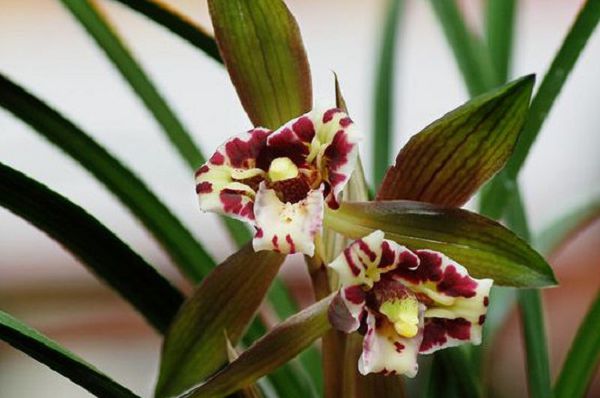
Orchids are very delicate flowers with a low survival rate, so it is impossible to determine how many years a tissue-cultured orchid will take to bloom. If someone's cultivation method is appropriate, the orchid will bloom a bit earlier; if the cultivation is inappropriate, the blooming time will be delayed. To make an orchid bloom earlier, during cultivation you must ensure good air circulation and also water the plant in a timely manner.
The blooming time of tissue-cultured orchids
Orchids are also known as spring orchids (Cymbidium goeringii) and orchid grass, and are often grown as household flowers. People usually propagate orchids by three methods: division, sowing, and tissue culture, among which the tissue culture method is the least common. Some people will ask. Orchids are very delicate flowers with a low survival rate, so how many years they take to bloom is uncertain.
During cultivation, the orchid will die at the slightest mistake. If someone's cultivation method is appropriate, the orchid can bloom earlier; if someone's cultivation method is inappropriate, the orchid's blooming time will be delayed. To make an orchid bloom earlier, during cultivation it is best to place the plant in a cool, ventilated spot, and provide proper shading when the light is strong.
Orchids like to grow in a warm and humid environment and are afraid of dryness. During cultivation, you must water the plant in a timely manner to prevent the soil from becoming dry from lack of water, which would affect the plant's normal growth. Orchids have a relatively high water requirement; during cultivation, you can water the plant according to the principle of watering when dry and stopping when wet, and generally watering the plant 2 times a week is best.
Orchids are terrestrial herbaceous plants with high soil requirements, and are suitable for growing in loose, fertile, humus-containing sandy soil. During cultivation, you can mix leaf mold, peat soil, and vermiculite to prepare the soil. When cultivating orchids, you must ensure good air circulation and must not keep the plant in a dark, damp environment for a long time.