How should the soil be mixed when planting orchids?
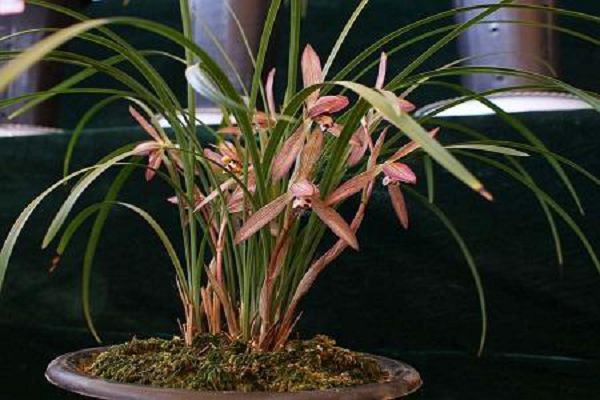
Orchids are mainly divided into two types: fine-leafed and broad-leafed. When mixing soil, the former mainly uses leaf mold, while the latter mainly uses solid soil, though the specific degree of emphasis depends on the growing environment. The simplest is to mix red soil and leaf mold at a ratio of 3:7, or mix garden soil, field soil and leaf mold at a ratio of 3:2:5, or mix coarse sand and leaf mold at a ratio of 3:7. In short, all of them must be based on the three points of air permeability, water retention and humus content.
I. Soil selection by variety
It has many varieties, mainly divided into two types: fine-leafed and broad-leafed. When planting, different varieties require different soils, though most are based on leaf mold. Among them, the fine-leafed type mainly uses leaf mold when planting, while the broad-leafed type mainly uses solid soil, though the specific degree of emphasis depends on the growing environment.
II. Soil mixing
1. The simplest soil ratio for planting is mixing red soil and leaf mold, at a rough ratio of 3:7. This provides sufficient nutrients and is good for plant growth.
2. When planting, if red soil is not easy to obtain, you can also use garden soil mixed with an appropriate amount of leaf mold. Specifically, mix garden soil, field soil and leaf mold at a ratio of 3:2:5. However, garden soil and field soil are usually previously cultivated, mature soil, so the amount used can be increased.
3. When cultivating and caring for orchids, the soil is also required to have a certain air permeability, so an appropriate amount of sand can also be mixed in. For the sand, coarse sand is best, as it has better air permeability and drainage. Specifically, mix three parts coarse sand with seven parts leaf mold.
III. Points to note
When planting orchids, no matter how the soil is mixed, note that it must be based on the three points of air permeability, water retention and humus content. If it contains only humus but has poor air permeability, the roots are prone to rotting later and the plant cannot survive. If it has good air permeability but no humus, the nutrients are insufficient and growth will also be affected.