When do orchids bloom? What are the reasons they don't bloom
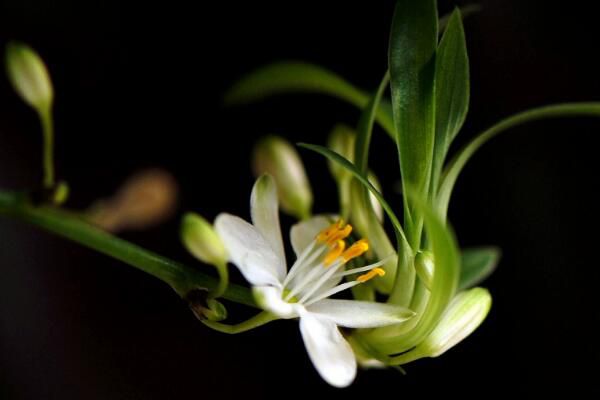
In the long course of ancient Chinese history, the orchid flower has been hailed as the flower of gentlemen, carrying high symbolic value, and it is also one of China's ten most famous flowers, being the blossom produced by orchid plants. There are many varieties of orchid flowers, and their blooming periods are more or less evenly distributed throughout the four seasons of the year, so when an orchid flower blooms still depends on the variety.
When do orchid flowers bloom
There are many varieties of orchid flowers, and as far as blooming is concerned, their times are roughly distributed across all four seasons; the key still depends on the plant's growing environment, as well as the plant's health and level of vigor. However, the duration of each blooming period is fairly similar, with most beginning to fade after lasting 2 months or 3 months.
For example, the relatively common Cymbidium goeringii (Spring Orchid) blooms from January to March; the blooming period of Cymbidium faberi (Hui Lan) is between March and May; Cymbidium ensifolium (Jian Lan) generally has a blooming period from May to October, and at the latest will bloom in July; in addition, Cymbidium sinense (Mo Lan) and Cymbidium kanran (Han Lan) bloom in winter, with their blooming period roughly from November to January or February of the following year, depending on whether spring comes early.
Reasons orchid flowers don't bloom
1. The plant has not reached blooming age
A plant won't bloom in the very first year after being planted; such cases are extremely rare. Generally speaking, a plant needs about 2 to 3 years to grow, and each year's growth and development is preparation for producing stronger roots the next year. To use an imperfect analogy, no human can have the ability to bear children before their organs are mature.
2. Differences between varieties
As mentioned above in the article, different varieties of orchid flowers bloom at different times; there are differences between varieties, and differences in growing climate, growing conditions, and growing practices can also lead to differences in blooming time, and even frequent difficulty in blooming. There is also the case of insufficient nutrition, where the flower buds remain poorly developed, and in such a situation they cannot bloom either.
3. Improper watering and fertilizing
Too much watering will keep the flower buds, during their differentiation period, under prolonged moist care of the rhizome; the growth of branches and leaves becomes vigorous, but reproduction is suppressed. The organic matter within the plant is affected, and the flower buds have little drive to grow. If the fertilizer contains too much nitrogen and insufficient phosphorus and potassium, the reproductive conditions also cannot be met. In this situation, either reduce the amount of watering and loosen the soil to remove water, or replace it with a growing medium with balanced nitrogen, phosphorus, and potassium nutrition, or apply additional phosphorus and potassium fertilizer.