Orchids love moisture - does that mean the wetter the better when watering?
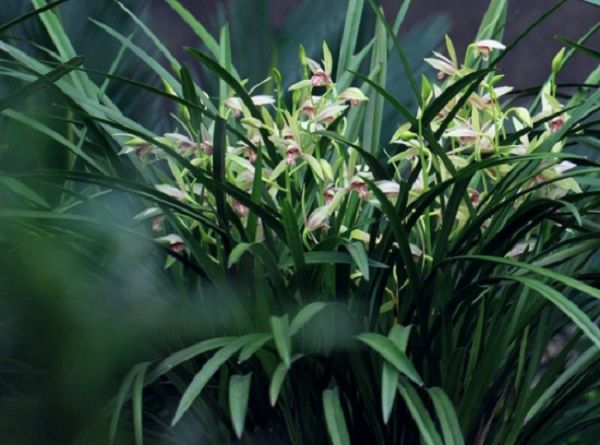
The answer, of course, is no. On the whole, orchids need relatively higher air humidity and relatively lower potting soil moisture; the ideal is three parts wet to seven parts dry.
The amount of water given to orchids depends on the season, temperature, air, humidity, ventilation, plant size, and how wet or dry the potting soil is. The best water for orchids is rainwater or spring water, followed by river water; tap water will also do, but whatever the water, it should be left to stand for 1-2 days so that impurities settle out and stale odors escape before use. Do not use well water or other saline-alkaline water, otherwise the potting soil becomes saline-alkaline, which is harmful to orchid growth.
Fine drizzle is suitable for orchid growth, while prolonged rain and heavy rain should be avoided.
Around midday in summer and during thunderstorms, protection is needed, because at such times the pot temperature is very high; if the plant is drenched by cold rain, damp heat and stale air become trapped in the pot, and root rot is most likely. In spring, when temperatures are lower, the potting soil should be kept dry and watering reduced to prevent new shoots from rotting; in summer and autumn, when temperatures are higher and orchids grow vigorously with high evaporation, watering should be increased, preferably in the morning and evening. During the plum rain season, the potting soil should be kept slightly dry; too wet will cause leaf buds to wither and invite disease.
After autumn, the amount of watering should be reduced as appropriate.
In winter, indoor potting soil should be kept slightly dry, and the frequency of watering should be reduced accordingly; water at midday, pour along the edge of the pot, and never splash water over the leaves.