Do potted clivias need repotting after two years?
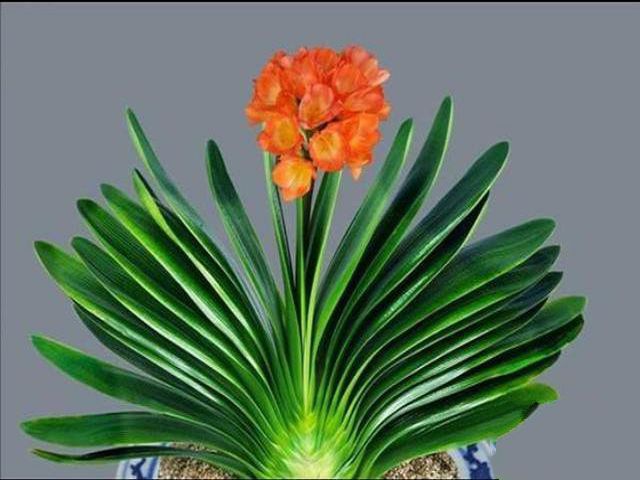
The growth cycle of clivia from seedling to flowering is usually 1 to 4 years; that is, when the plant has 16 to 18 leaves, as long as fertilizer, water, light and other care are all fairly well managed, the plant will generally bloom.
For smaller plants one to three years old, the soil and pot can be changed every year. The reason is that the plant's root system is relatively small and easier to handle. After changing to new soil and a pot one size larger, the plant will grow faster and better. For some larger plants and some that have already bloomed for many years, because the root system is relatively large, the roots are easily damaged when repotting and changing soil, and the operation is especially troublesome. Therefore, repotting every year is not recommended. Instead, methods such as reasonably increasing the amount of fertilizer are used to promote plant growth.
Do clivia plants that have already been potted for two years need repotting? It mainly depends on the size and growth state of the plant and the fertility level of the soil. Under normal circumstances, smaller plants that have been cultivated continuously for two years do need repotting. You can change to a pot one to two sizes larger and at the same time change in new nutrient soil; the plant will grow faster, which also shortens the plant's time to flowering. We can carry out the following steps.
One, nutrient soil. First, prepare a loose, breathable, sandy humus nutrient soil. Usually materials such as leaf mold and rotted bark are used, and some coarse sand can be added at the same time. You can also use a three-in-one nutrient soil of peat soil, vermiculite and perlite mixed in a 4:2:1 ratio, and at the same time add two portions of decomposed crushed peanut shells.
Two, potting up. After taking the clivia plant out of the original pot, gently shake off the original nutrient soil. For the time being, do not rush to pot it up; first place the clivia plant in a ventilated, shady place to air-dry for one to three hours, so that the plant's root system becomes slightly soft, avoiding breaking the roots when potting up, and making it easier to handle. Then, first use a tile to block the drainage hole of the new pot, and put in 2 to 3 cm of nutrient soil as a base layer. Because a plant grown for two years has a relatively large root system, when placing it into the pot, some nutrient soil must be wrapped inside the plant's root system to avoid the soil being filled in too loosely and causing suspended roots. Then add nutrient soil around the sides and shake fully so that the soil is filled solidly and closely contacts the roots. In this way, the plant's root system will quickly absorb water and nutrients, and the recovery period after potting will also be shortened.
In the clivia breeding bases from Jilin to Changchun, Anshan, Liaoyuan, Siping and other areas, when potting up clivia plants, they usually put a dozen or twenty fried hemp seeds at the bottom of the pot as a kind of long-acting base fertilizer for the plant, which will effectively promote the plant's growth and increase the plant's seedling maturation speed and seedling maturation rate. In other areas, you can put in 3 to 5 cooked soybeans or peanut kernels. They must be placed at the very bottom of the pot, and the amount must never be too much; there must be 3 to 5 cm of nutrient soil separating the roots to avoid damage to the root system. After one to two years of cultivation, the plant will soon enter the flowering period.