Can the old soil still be used when repotting a clivia?
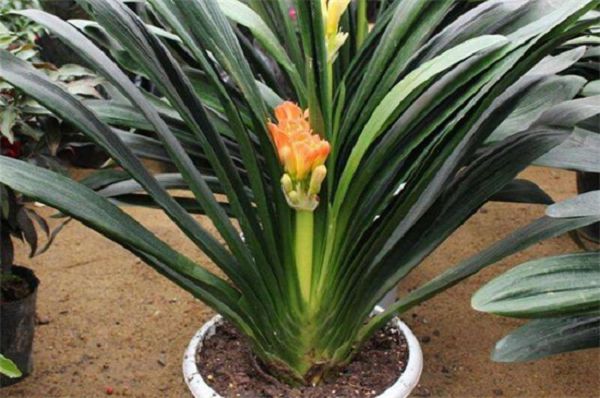
Because the clivia is a plant with fleshy roots, proper repotting can promote the plant's growth and development. Generally, when repotting, if the old soil has become powdery, then new soil must be used entirely; when the old soil has uniform particle size, it should be placed under blazing sun for one day, and then a little new soil can be added before potting.
1. It is best not to use old soil when repotting a clivia
The clivia is one of the common household ornamental flowers, preferring to grow in fertile, well-draining, moist soil. Proper repotting is beneficial to its growth and development, so in fact it is best not to use old soil, because the clivia's roots have very high requirements for soil. If the old soil contains pathogens or has clumped, it will cause poor growth of the clivia and root rot.
If it really must be used, observe whether the old soil has become powdery. If it is powdery, it cannot be used directly, because this kind of soil, once settled, will make the soil's water permeability very poor, and root rot will appear before long. If the soil particles are uniform, it is best to place it in sunlight for one day, and then add some loose soil before potting. Therefore, generally, replacing with new soil is best.
2. Clivia repotting method 1. Root pulling treatment
Because the clivia is a plant with fleshy roots, pulling it out directly during repotting will damage the roots. It is best to water it thoroughly one week before repotting, then gently pull the roots up slowly from the old soil, use sterilized scissors to promptly cut off the fibrous roots and dead roots on the old roots, and place it in a ventilated environment.
2. Add new soil
Because the clivia's roots have very high requirements for soil and it prefers to grow in loose, well-draining, fertile soil, generally leaf mold, forest soil, humus soil and gravel can be selected and mixed in a ratio of 2:1:3:2, then an appropriate amount of organic fertilizer solution is applied as a base, and it is replanted in the pot.
3. Post-repotting care
Because the clivia prefers to grow in an environment with sufficient sunlight, if there is insufficient sunlight, it will cause poor growth of the plant and yellowing leaves. After repotting, the plant needs a large amount of nutrients, so it is best to maintain 6 to 7 hours of light per day and keep the temperature at around 18°C to 28°C.
4. Water and fertilizer management
Because autumn, winter and spring are the periods of vigorous growth for the clivia, after repotting it is best to water once every 1 to 2 days, then apply organic fertilizer or compound fertilizer solution once every 3 to 4 weeks. In the hot midsummer season, fertilization should be stopped; in winter, keep it indoors in a sunny spot for care.