What are the reasons why freesia does not bloom?
Freesia is a flowering plant with fairly high ornamental value. It is distributed throughout various regions of China, and the ornamental value of freesia lies mainly in its flowers. However, many people find when growing it that freesia often fails to bloom, which seriously reduces its ornamental value. So why does freesia fail to bloom? Today the editor brings you the reasons why freesia does not bloom, so let us take a look together below!
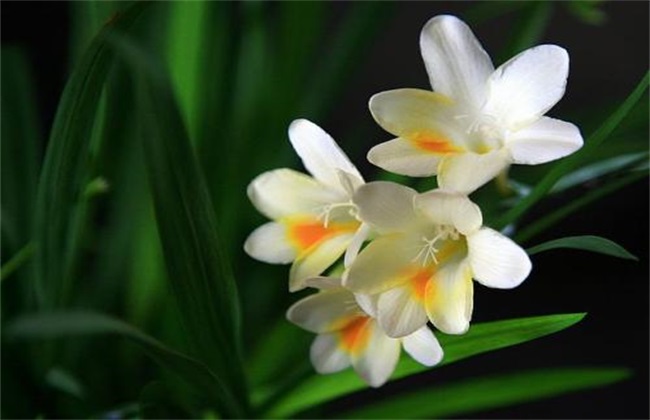
1. Insufficient light
Before blooming, freesia has a very large demand for light. Sufficient light is needed to ensure that freesia blooms normally, and if light is insufficient before flowering, it will have a great impact on the flower bud differentiation of freesia. This causes the flowering period of freesia to be delayed. Therefore, when growing it, we should pay attention to maintaining sufficient sunlight. However, because the flowering period of freesia is in summer, although light is sufficient at this time, it is relatively intense, and the temperature is also relatively high. If it is exposed to strong sun, then it is also very unfavorable to its growth. Therefore, pay attention to doing a good job of shading, so that it can receive light normally while also avoiding sunburn.
2. Temperature too low
Similar to the light factor, temperature is also one of the main reasons causing freesia not to bloom. As just mentioned, the flowering period of freesia is in summer, so it also has a certain demand for temperature. If the temperature is too low, then freesia grows slowly, is prone to frost damage or enters dormancy, affecting its blooming. During flower bud differentiation and inflorescence growth, freesia has different temperature requirements. After growing about six leaves, the temperature should be kept at around 15°C to promote flower bud differentiation. Then during inflorescence development, the temperature should be appropriately raised to around 20°C to speed up the growth rate of freesia.
3. Overwatering
Although freesia has a very large demand for water during growth, we must also pay attention to controlling the amount and frequency of watering. If watered too much, freesia also cannot grow in a moist environment for a long time, otherwise it easily causes root rot, which is also very unfavorable to the growth of freesia. So when approaching the flowering period of freesia, we should pay attention to appropriately reducing the amount of watering; usually watering once about every two days is enough. Controlling watering is very beneficial to the blooming of freesia, but it also cannot be watered too little, otherwise yellow leaves and withered leaves will appear due to lack of water.
4. Insufficient nutrients
When freesia blooms, because it consumes a large amount of nutrients, its fertilization work is very important. If fertilizer is not applied in time and causes insufficient nutrients, then freesia will delay its flowering period due to lack of nutrients and fail to bloom. So when growing freesia, we should pay attention to appropriate fertilization. Fertilizer is generally mainly phosphorus fertilizer, and foliar fertilizers such as monopotassium phosphate can be sprayed, but note that it must be fully diluted to avoid fertilizer burn. Then during the flowering period, the application of nitrogen fertilizer should be controlled, to avoid excessive nitrogen fertilizer causing leggy growth and no blooming.
The above is a brief introduction to the reasons why freesia does not bloom. That is all for today's introduction. This article is for reference only, and I hope it can help everyone!