Has Your Orchid Been Treated with Hormones? A Few Ways to Tell
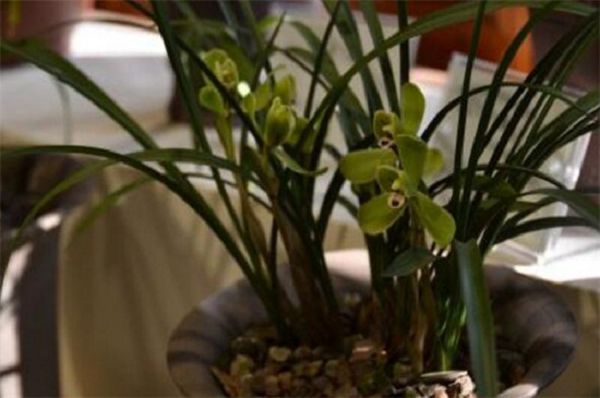
It is actually quite easy to tell whether an orchid has been treated with hormones. Generally, if an orchid has been treated with hormones, it grows faster than normal and its roots are thicker and sturdier, but the shape of a hormone-treated orchid is unbalanced, and its seedlings are weaker and smaller than normal ones, with yellow mixed into the green of the leaves, which lowers the orchid's ornamental value.
1. Growth rate
It is actually quite easy to tell whether an orchid has been treated with hormones. If we compare a normal orchid with one that has not been treated with hormones, we will find that a hormone-treated orchid grows much faster, though its ornamental value is not as high as that of a normal orchid.
2. Unbalanced plant
There are many very different orchid varieties. Many people do not know that a hormone-treated orchid usually has thicker, sturdier roots than it originally would, but the size of the plant is very unbalanced, which affects the orchid's overall appearance.
3. Strength of the seedlings
We can also usually tell whether hormones have been used by looking at the orchid's seedling stage. Generally, orchid seedlings that have not been treated with hormones are relatively stronger, and their survival rate after planting is also high, whereas orchid seedlings treated with high levels of hormones are weak and small, and after planting they easily wither and die.
4. Difference in color Besides relying on growth rate to tell whether an orchid has been treated with hormones, you can also distinguish by color. An orchid that has not been treated with hormones grows naturally, and its leaves are tender green, whereas after an orchid is treated with hormones, after growing for a period of time its leaves will have yellow mixed into the green, which lowers the orchid's ornamental value.