What to Do When Camellia Does Not Grow Leaves? Causes and Solutions
Camellia is a very common flowering plant in our daily life. It can not only be used as a landscaping plant, but can also be grown as a potted plant. Therefore, the cultivation area of camellia in our country is still very large. When camellia is grown and reaches its vigorous growth period, the phenomenon of camellia not growing leaves often occurs. So what should be done when camellia does not grow leaves? Below, the editor will give you a brief introduction. Let's take a look together!
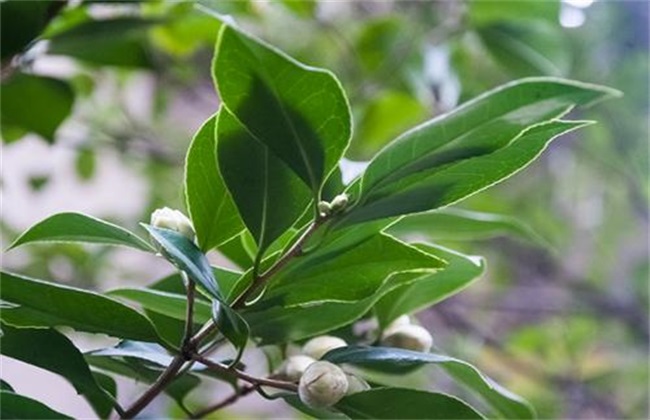
1. Supplement nutrients
During growth, camellia needs sufficient nutrients to grow vigorously. During its growth period, if fertilization is not carried out on time and regularly, it is very easy to cause nutrient deficiency in camellia. As a result, camellia cannot grow new leaves due to lack of nutrients. Therefore, every spring, we should pay attention to repotting and changing the soil, and add sufficient base fertilizer. We should also do a good job of topdressing to ensure sufficient nutrients and provide adequate nutrition for the growth of new buds and new leaves. However, we should also pay attention to controlling the amount of fertilizer, not too much, to avoid fertilizer damage.
2. Water reasonably
Improper fertilization can cause camellia to fail to grow new leaves, and similarly, too much or too little water will also affect the growth of camellia. If there is too much water, the camellia plant cannot absorb it all, causing water accumulation in the soil, and the roots are then very prone to rot, thus affecting nutrient absorption and the growth of new leaves. If there is too little water, camellia will also have difficulty growing new leaves due to lack of water. Therefore, we should pay attention to reasonable watering, only meeting the water needs for camellia growth, and avoid water accumulation, which can effectively promote camellia leaf growth.
3. Control light
Camellia likes to grow in a semi-shady environment. If it is exposed to the sun for a long time, it will cause leaf sunscald and hinder its growth. But it also cannot be grown in a shady environment for a long time, otherwise it will be unable to carry out photosynthesis. Therefore, we should reasonably control light according to seasonal changes. In winter, spring, and late autumn, camellia can be given full sun. This is because the sunlight during this period is relatively soft and will not cause sunscald. However, in strong light environments such as summer, shade and cooling must be provided in time to prevent camellia from being unable to grow new leaves under high temperature and strong light.
4. Transplant appropriately
Camellia needs appropriate transplanting every year, generally from October to January. If we do not transplant with soil when transplanting or repotting, it is very unfavorable to the growth of camellia. Camellia needs a period of time to adapt before it can grow normally. Therefore, when transplanting, it is best to do it from November to December. Repotting at this time can minimize the impact on camellia growth, and transplanting should be done with soil to ensure normal growth of camellia.
The above is a brief introduction to what to do when camellia does not grow leaves. That is all for today's introduction. This article is for reference only, and I hope it can be helpful to everyone!