A Detailed Explanation of Farmyard Manure Fermentation Techniques, Methods and Key Operational Points
Crop cultivation is very well established in China, and when carrying out planting and production, fertilization work is very important if you want to ensure yield and quality. In recent years, the application of farmyard manure has also become increasingly popular. When applying farmyard manure, it must be fully decomposed and fermented. So how should farmyard manure be fermented? Below, the editor brings you the fermentation techniques for farmyard manure. Let's take a look!
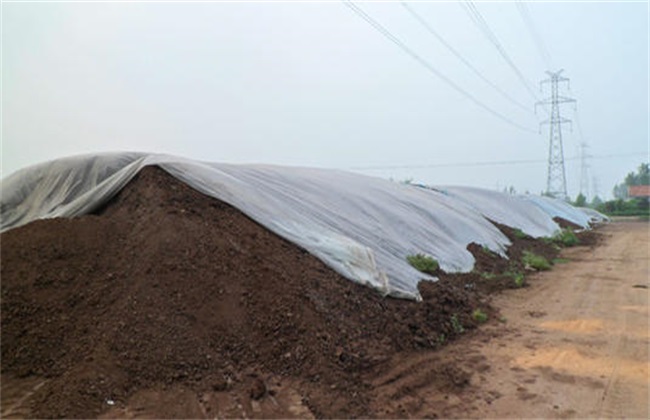
1. Loose Piling Method
One farmyard manure fermentation technique that many people commonly use is the loose piling method. First, we need to pile the collected fresh livestock manure and urine at the manure accumulation site, keeping it in a loose environment. During the piling process, there must be good ventilation. This allows the livestock manure and urine, under high-temperature conditions, to decompose and decompose faster, shortening the time before use. Using the loose piling method makes it possible to produce decomposed farmyard manure in a short time. However, the drawback is that during fermentation, nutrients such as nitrogen are lost to a relatively large extent, so it is only suitable for use when fertilizer is urgently needed.
2. Tight Piling Method
If you want to ensure that nutrients are not lost during decomposition, then the tight piling method is very important. As with the loose piling method, first pile the livestock manure and urine at the manure accumulation site, and during the piling process press it firmly. If the fertilizer is too dry, then an appropriate amount of water can be added to keep it moist. Keep the height of the manure pile at about 2 m. After all the fertilizer has been piled, cover it with soil. Then keep the temperature at about 20-30°C. This method can ensure the humus content in the farmyard manure and reduce nitrogen loss. However, the decomposition speed is relatively slow; full decomposition takes about half a year.
3. Alternating Piling Method
When fermenting farmyard manure, many people want both to shorten the decomposition and fermentation time and to avoid losing too much nitrogen. Therefore, the alternating loose and tight piling method has emerged. First, pile the farmyard manure loosely outside the pen to promote fermentation. Then, after about three days, when the temperature of the manure pile reaches about 60°C, more organic fertilizer can continue to be added, accumulating it layer by layer. Raise its height to the height of tight piling, then seal the pile with soil, control the temperature well, and prevent air from entering. This avoids nutrient loss and water evaporation. Generally, after about two months it can become semi-decomposed, and full decomposition takes only about 4 months.
4. Rapid Microbial Treatment Method
First, spread out the farmyard manure that needs to be decomposed, then sprinkle in an appropriate amount of decomposing agent, taking care to control the ratio well. After spreading, turn it over to ensure that the decomposing agent is fully and evenly mixed with the farmyard manure. Then stack the farmyard manure, keeping the height at about 80 cm. Then insert a thermometer into the stack at a 45-degree angle. Observe about twice a day; if its temperature exceeds 60°C for two consecutive days, then turn it over. Wait until the farmyard manure has no foul odor and its temperature drops below 40°C, then it can be piled into a large stack for later use. The time generally needed is only about one month.
The above is a brief introduction to farmyard manure fermentation techniques. That is all for today's introduction. This article is for reference only, and we hope it can be helpful to everyone!