How to prune Pachystachys lutea? Correct methods and precautions
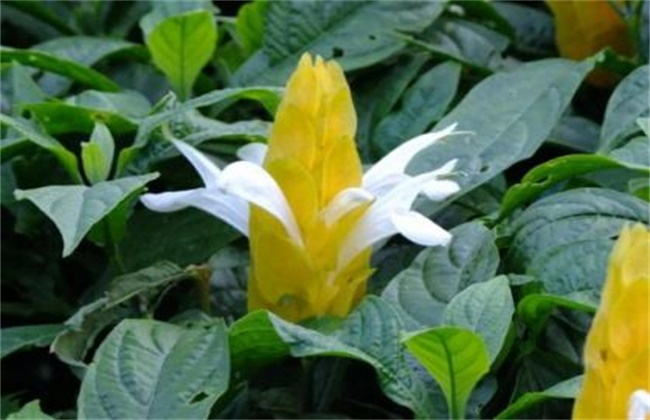
Pachystachys lutea, also known as the golden shrimp plant or "gold wrapping silver", has a neat, uniform form and peculiar flower shape. During cultivation it needs to be pruned appropriately, as this promotes its growth and also maintains good ornamental value. So how should Pachystachys lutea be pruned? Let's take a look together.
1. Pruning time
The best time to prune Pachystachys lutea is in spring and autumn. Spring is the time when new buds sprout and leaves grow, so weak branches and old leaves should be pruned away in good time. Autumn is its flowering season, and after the flowering period the spent flowers should be pruned promptly to avoid unnecessary nutrient consumption. Generally no pruning is needed in winter, but if yellow leaves are present they still need to be pruned away in good time, so they do not fall into the pot and to prevent disease.
2. Pruning methods
Pachystachys lutea needs pinching out during the seedling stage; pinching controls the plant's height and needs to be done several times. The first time is when the plant has grown to about 6 cm, when the top shoot is removed to let it sprout more side branches. The second pinching is when the side branches have grown to 4 cm, when they are cut back to encourage more branching. Pruning during the growing period is also very important, and can mainly be summarised as thinning and heading back. Thinning mainly involves pruning overly dense branches, crossing branches and old branches to keep the vigorous branches and ensure good air movement through the plant. Heading back means pruning some of the fastest-growing branches to control their growth rate and height.
3. Pruning diseased leaves
At other times Pachystachys lutea does not need pruning, but if it is infected by pests or disease, what we need to do then is prune away the branches infected by pests or disease. Not only pruning, but also spraying with pesticide in good time to prevent the pests and disease from continuing to harm other branches and leaves, and afterwards management and prevention should be strengthened to avoid the pests and disease recurring.
4. Precautions
When pruning, try to keep the cuts smooth; the wounds can be coated with plant ash to prevent pathogens from entering. After pruning, place Pachystachys lutea in a cool, ventilated spot to protect it from direct sun and rain, and once the wounds have dried, carry on with normal care.
The above is an introduction to how to prune Pachystachys lutea. We hope it helps you. For more related knowledge, please keep following us.