How can fertilization be efficient? A detailed explanation of techniques and methods
China's land area is very large, so there are also very many crops suitable for planting. And no matter what crop is being planted, its fertilization work is very important. Rational fertilization is the key to meeting the nutritional needs of crop growth, and when fertilizing, efficient fertilization is crucial. So how can fertilization be efficient? Today the editor brings you efficient fertilization techniques and methods, let's take a look below!
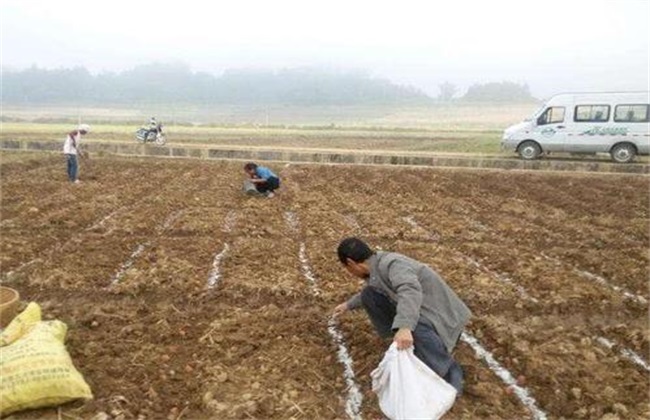
1. Fertilize according to the weather
When fertilizing, we should fertilize rationally according to weather changes. In low-temperature seasons, the fertilization time should be appropriately advanced, and if organic fertilizer is used as base fertilizer, it must be fully decomposed. Then in high-temperature seasons such as summer, fertilization should mainly be deep application, to avoid fertilizer being lost too quickly and causing seedling burn. If the soil moisture is too high, then it should be applied appropriately shallowly, and otherwise deeply. When the soil is dry, because fertilizer is difficult to absorb after application, it should be carried out together with watering. Finally, do not fertilize before the rainy season, to avoid fertilizer being lost with the water.
2. Fertilize according to the crop
Different crops also have different fertilization methods. For example, if the crop being planted is a root or tuber type, then the fertilizer should mainly be phosphorus and potassium fertilizer, combined with an appropriate amount of nitrogen fertilizer. For leafy vegetables, it should mainly be nitrogen fertilizer, with phosphorus fertilizer as the main companion. Moreover, gramineous crops such as rice and corn also have a relatively large demand for nitrogen. Finally, because legume crops contain rhizobia, their nitrogen fixation capacity is strong, and their demand for nitrogen is relatively low, so fertilization should mainly be phosphorus fertilizer.
3. Fertilize according to crop growth
Crops have different physiological characteristics in different growth periods, so fertilization will also differ. During the stage of crop root, stem and leaf development, generally more nitrogen fertilizer should be applied. For example, if early rice is planted, then because the growing season of early rice is relatively short, the peak demand for nitrogen is generally during the period from transplanting into the greening stage to tillering, about 2-3 weeks. So attention should be paid to heavily applying tillering fertilizer, and supplementing ear fertilizer and grain fertilizer, etc. If it is a hemp crop, because the early growth rate is fast, it is not only necessary to meet the nitrogen requirement, but also to pay attention to supplementing potassium fertilizer.
4. Fertilizer properties
There are now very many fertilizer varieties on the market, and their properties are all somewhat different, so we also need to adjust the fertilization method according to the properties of the fertilizer. For example, for relatively stable fertilizers such as urea and superphosphate, they should be applied as base fertilizer, or applied in advance into the concentrated soil layer before planting. For some unstable fertilizers such as ammonia water and ammonium nitrate, they should be applied deeply and covered tightly with soil to prevent fertilizer loss. Finally, fertilization should also be based on differences in crop rotation, for example, for cold-stubble crops such as rice and cabbage, after passing through the low-temperature season, more hot-natured fertilizers such as decomposed manure should be applied.
The above is a brief introduction to efficient fertilization techniques and methods. That is all for today's introduction. This article is for reference only, and I hope it can help everyone!