How to Improve the Breeding Capacity of Meat Pigeons? Master These Farming Techniques
Meat pigeons are now a main direction of pigeon farming in China, with a very large farming area in the country. When raising meat pigeons, their breeding capacity is the key to ensuring the continued development of the flock. Therefore, improving the breeding capacity of meat pigeons is something many people pay close attention to, so how do you improve it? There are mainly four aspects to start with. Below, the editor will give a brief introduction. Let's take a look together!
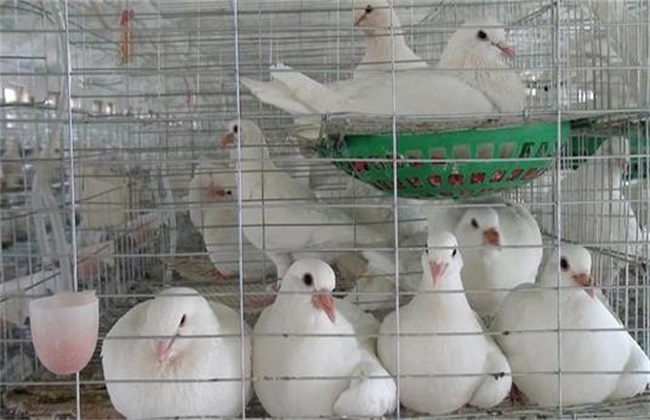
1. Increase the egg production rate
If you want to improve the breeding capacity of meat pigeons, the first thing to do well is to increase their egg production rate. We need to do a good job in pairing the meat pigeons. When pairing, the age of the male pigeon should preferably be older than that of the female pigeon. This is because male pigeons have a stronger ability to sit in the nest, while young female pigeons are just the opposite of old male pigeons: they like to move around outside and have a relatively low rate of entering the nest. So if an old male pigeon is in the loft, it can stimulate the female pigeon to come into heat, thereby increasing the egg production rate. Moreover, the egg quality is also very good, so when pairing, it is best to pair an old male pigeon with a young female pigeon.
2. Increase the hatching rate
After increasing the egg production rate of meat pigeons, we also need to pay more attention to their hatching rate. During the incubation period of meat pigeons, we must be careful not to disturb them, especially for cage-raised meat pigeons. If meat pigeons are startled during incubation, it is very easy for the eggs to spoil. The meat pigeons will dash around wildly in the cage, causing damage to the breeding pigeons. We should also pay attention to improving the fertilization rate of meat pigeons. During the mating period, we should appropriately add some feed such as peas to increase the fertilization rate of the breeding pigeons. Then we must ensure that each meat pigeon has sufficient space for activity, to avoid mutual interference among the breeding pigeons.
3. Increase the hatching-out rate
Under normal circumstances, as long as the egg production rate and hatching rate are ensured, the hatching-out rate is generally not very low. However, if we want to increase the hatching-out rate, then suitable rearing work is still very important. Within half a month after the breeding pigeons begin incubating, we must pay attention to bathing the pigeons regularly. If they are cage-raised, then the humidity of the pigeon loft should be appropriately increased, and bathing may not be necessary. But if they are free-range, then this task cannot be neglected, so as to reduce the hardness of the pigeon eggs and make it easier for the squabs to hatch out.
4. Increase the survival rate
Improving the survival rate of meat pigeons is the key to ensuring their breeding capacity. When raising meat pigeons, merging nests generally occurs, and a pair of breeding pigeons usually carries at most about 4 squabs. If there are too many, it is easy to cause unbalanced feeding and death. When feeding squabs, some small-particle feed should be appropriately given, but not too much. This avoids too much feed from the breeding pigeons affecting the growth of the squabs. Then attention should also be paid to proper disinfection to prevent harm from pathogens and the occurrence of disease.
The above is a brief introduction to how to improve the breeding capacity of meat pigeons. That is all for today's introduction. This article is for reference only, and we hope it can help everyone!