Why Do Lucky Bamboo Stems Turn Yellow? Causes and Solutions
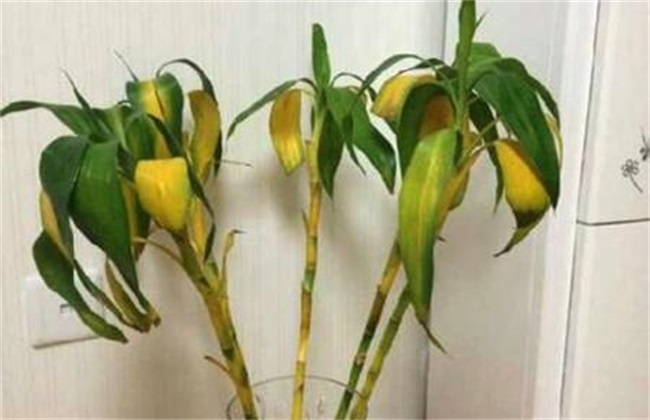
Lucky bamboo (Dracaena sanderiana) is a very common potted flowering plant in our daily lives, and it is distributed throughout China. As a potted plant, lucky bamboo is still very popular. However, the more people grow it, the more problems arise. When growing lucky bamboo, the phenomenon of yellowing stems often occurs. So why do lucky bamboo stems turn yellow? Below, the editor will give you a brief introduction. Let's take a look!
1. Overwatering
When growing lucky bamboo in pots, we need to do all kinds of management work well, including watering. Lucky bamboo actually does not need much water, so when watering, we must be careful to control the amount and frequency. If watering is too frequent or too much is given at once, then the lucky bamboo cannot absorb it all, resulting in water accumulation. Over time, this will cause root rot and root decay in the lucky bamboo, and the lucky bamboo stems will also turn yellow as a result. Therefore, we should promptly drain away the accumulated water, then loosen the soil to promote water evaporation. If the situation is serious, then we should do a good job of changing the soil and repotting, cut off the rotten roots, and strengthen management.
2. Excessive Light
Light has a very big impact on the growth of lucky bamboo, and its tolerance for sun exposure is very poor. If, when growing lucky bamboo, it is placed in strong light for a long time and exposed to direct strong light, then the plant is very easily scorched. This will not only cause the stems to turn yellow, but the leaves will also show yellowing. So when growing lucky bamboo, we should pay attention to providing it with a cool and ventilated environment, then spray water appropriately to ease the harm caused by strong light. Encourage it to recover slowly, and after recovery, be sure to do a good job of shading. Because lucky bamboo has relatively strong shade tolerance, letting it occasionally receive scattered light is enough to meet its needs.
3. Insufficient Nutrients
The growth of lucky bamboo requires sufficient nutrients, especially during its peak growing season, when it consumes a large amount of nutrients. Therefore, if we do not fertilize in time to supplement nutrients during the peak growing season of lucky bamboo, then the lucky bamboo will fail to absorb nutrients due to nutrient deficiency, causing the lucky bamboo stems to turn yellow. When growing lucky bamboo, we should pay attention to regularly spraying an appropriate amount of diluted fertilizer to supplement nutrients. However, after each fertilization, it is best to water with a small amount of water to dilute the fertilizer and help the lucky bamboo absorb nutrients.
4. Unsuitable Soil
Soil is very important for the growth of lucky bamboo, and soil is also an important cause of yellowing lucky bamboo stems. Although lucky bamboo has strong adaptability, the quality of the soil will still affect its growth ability. If lucky bamboo grows for a long time in soil that is compacted and severely salinized, then it is very unfavorable for root growth, causing the lucky bamboo roots to be unable to breathe, and fertilizer and water cannot seep down into the soil in time, affecting the lucky bamboo's absorption of water and nutrients and causing the lucky bamboo stems to turn yellow. Therefore, we should maintain a good soil environment, regularly change the pot and soil, and do a good job of soil disinfection to ensure the normal growth of lucky bamboo.
The above is a brief introduction to why lucky bamboo stems turn yellow. That is all for today's introduction. This article is for reference only, and I hope it can help everyone!