Is a Clivia bud sport really any good? A comprehensive analysis of the pros and cons
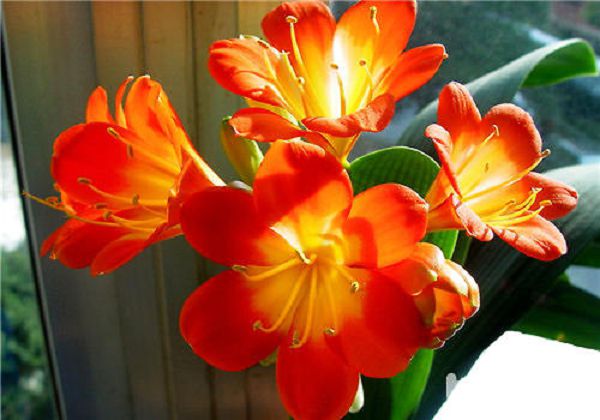
A Clivia (detailed introduction) bud sport refers to how, after three or four years of cultivation, Clivia tends to produce tillers around the rhizome, commonly known as "axillary buds" (lateral buds, limb buds). Using Clivia tillers, cut away from the mother plant for propagation, generally has the ability to maintain the characteristics of the original variety, but sometimes genetic mutations also occur, causing a certain part or organ of the plant to differ noticeably from the characteristics of the original variety, such as a shorter plant type, larger or shorter leaves, more leaf colors, different flowers and seeds, and so on. This phenomenon is called a "bud sport."
Clivia (detailed introduction)
For the many Clivia enthusiasts, carefully observing Clivia in ordinary times is important; once a superior mutant shoot or bud is found, reporting it promptly to experts or research departments for identification is the best method. When axillary buds grow out, leaf variations are easiest to spot. After severe natural disasters occur, it is also a good time to find bud sports resistant to certain natural disasters. In late December 1999, Guangdong suffered a historically rare freezing disaster, with the lowest temperature reaching -4°C to -5°C, making it very likely to select and breed new cold-resistant bud sport varieties from those Clivia plants that withstood the severe cold and were not frozen to death.
Because the growing conditions of Clivia have changed, this often also causes abnormal performance in Clivia. Therefore, the key is that in the process of bud sport selection, a comprehensive analysis must be made of some variation phenomena, carefully distinguishing whether it is a bud sport or a normal variation. The former is a hereditary change, that is, a true variation, while the latter is reflected by temporary changes in environmental conditions or cultivation management. Even for true bud sports, some appear relatively stable, while others appear unstable, and may even revert to their original state after a few years, with the variation disappearing.
If a superior mutant plant is found, it must go through steps such as primary selection, identification, and secondary selection, gradually breeding it into a new variety. The specific method is: when it is initially identified as a true bud sport, the plant should be protected well, marked, and the variation situation, location, characteristics, and so on recorded; in the second to third year, carry out secondary selection on the primary selected buds, and in the fourth year carry out final selection. For particularly excellent bud sport varieties, propagate them as quickly as possible in preparation for bringing them to market in the future, and give them names. Practice shows that Clivia bud sport selection is simple and easy to master, takes effect quickly, and is a good way to breed new varieties.