How to grow orchids? In cold seasons, pay attention to warming and protection
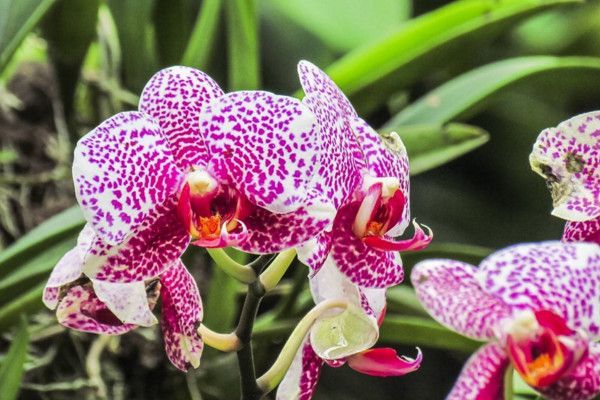
Orchids have been highly revered by people in our country from ancient times to the present. Their form is upright and elegant, and they have always been a symbol of the gentleman. Orchids are not troublesome to cultivate, but attention must be paid to warming and protection in cold weather.
Orchid cultivation methods
1. Soil selection
When planting orchids, it is best to choose neutral to slightly acidic soil that is rich in humus, loose and fertile, and well-draining. You can use a growing medium mixed in a certain proportion of leaf mold, vermiculite, perlite, etc. This helps it better absorb the nutrients needed for growth and thrive.
2. Reasonable fertilization
When formally potting for cultivation, add an appropriate amount of base fertilizer, and afterward apply additional fertilizer as needed. For additional fertilization, use dilute fertilizers such as liquid fertilizer or foliar fertilizer to avoid excessive concentration causing fertilizer damage and burning the roots. During the growing season, apply about 15% diluted decomposed cake fertilizer water, once every 15-20 days, which can make the branches and leaves grow more vigorously and help flowering.
3. Appropriate watering
Watering orchids should be determined according to temperature, the dryness or moisture of the potting soil, and growth conditions. When the leaves are large, water more; when there are few leaves, water less. From June to September, during the growth period of new orchid shoots, the amount of watering should be appropriately increased. On sunny days, water once every morning or evening, and do not water under the scorching sun. In autumn, reduce watering; generally, just spraying some water on the leaves is enough.
4. Light conditions
It is a semi-shade plant and mostly fears direct sunlight, so it needs to be cultivated indoors with bright light. During the hot high temperatures of summer, appropriate shading is needed to avoid too strong light burning the leaves and causing phenomena such as yellowing leaves. After October, when the weather turns cooler, except at noon, it can be allowed to get some sun to carry out photosynthesis and promote growth.
5. Temperature management
Orchids are relatively sensitive to temperature. When cultivating, the temperature should not be too high or too low. Generally, they can grow normally between 5°C and 25°C. In winter, if the low temperature is below about 3°C, it needs to be placed indoors in a warm place for care to avoid freezing damage. In summer, it must not exceed 30°C, otherwise it will accelerate water evaporation, making the plant's leaves withered and yellow and listless.
6. Disease and pest control
The main pests are scale insects and aphids. Scale insects can be picked off with sharp tools. Aphids are smaller, and soap powder mixed with 500 times water can be used as an insecticide for spraying. The disease is root rot, which causes the roots to rot. During care, the soil should be turned frequently to ensure sufficient air in the soil, and care should be taken not to water too much. This can effectively reduce the occurrence of diseases.