What are the common spring ploughing fertilization mistakes? Keep the precautions firmly in mind
After entering March, farmers enter a busy period, when spring ploughing is in full swing and temperatures rise, and it is also a critical period for fertilizing crops. However, many farmers often fall into fertilization mistakes at this time, which not only fails to increase yield but instead causes yield to decline. Now let us take a look at the common spring ploughing fertilization mistakes and precautions.
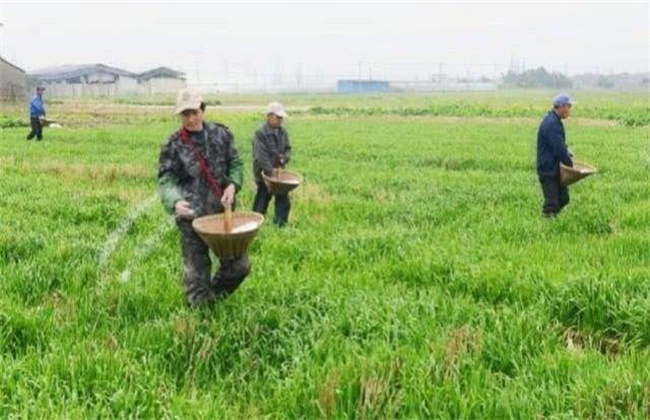
1. Do not apply undecomposed farmyard manure
After the beginning of spring, many farmers use greenhouse technology to start planting crops, and before planting they must first apply base fertilizer. Farmyard manure is a favorite among farmers because it is economical, relatively low in cost, and also fairly high in fertilizer efficiency. However, when using farmyard manure as base fertilizer, undecomposed manure must never be used, because this will cause the farmyard manure to continue decomposing in the field, very easily leading to root burn and dead seedlings, and in the process of decomposition and rotting it will also produce harmful gases. In addition, farmyard manure contains many pathogens and insect eggs, and if applied undecomposed it will cause serious pests and diseases, so farmyard manure must be decomposed before application.
2. Do not apply too much high-concentration fertilizer at one time
Many farmers believe that if crops are not growing well, it is because of fertilizer, and that as long as the amount of fertilizer applied is increased, there will definitely be a high yield, and that this is also beneficial for promoting crop growth. But they do not realize that they have already fallen into a mistake. No matter what kind of fertilizer it is, as long as too much is applied at one time, it will damage the crop root system, which in turn affects root vitality and absorption capacity, causing the aboveground plants to grow more slowly, and in severe cases killing the plants. The consequence of doing this is not only no increase in yield, but also a decrease in yield, so never apply too much fertilizer at one time.
3. Do not apply only microfertilizers
In the past, farmers blindly applied one kind of fertilizer as a top dressing, causing serious crop nutrient deficiency symptoms. With advances in agricultural technology, many farmers have also become aware of this and have paid attention to the application of microfertilizers. However, if only microfertilizers are applied while the use of other fertilizers is ignored, it will also cause poor crop growth. Therefore, you must not blindly apply microfertilizers just because you see this one point about them. You must reasonably match the fertilizer formula according to the growth needs of the plants and simply supplement microfertilizers in a targeted way.
4. Do not water immediately after applying urea
Many farmers have the habit of watering after fertilizing, but after applying urea, watering is absolutely not allowed, because after urea is applied to the soil it immediately converts to amide, and if watered immediately at this time, it will very easily cause nutrients to be lost with the watering, greatly reducing fertilizer use efficiency, wasting time and effort while failing to achieve the desired effect. Therefore, after applying urea, it is recommended to cover it with soil promptly, and it is not suitable to water directly.
The above is an introduction to spring ploughing fertilization mistakes and precautions. I hope it can help you. If you want to learn more related knowledge, please keep following us.