What are the risks of raising quail? Know them in advance so you have peace of mind
As a small type of poultry, quail farming has seen both peaks and troughs, but in recent years it has been fairly stable. As the market has become relatively stable, many people have ideas about raising them, yet they also worry about the risks. The main risks in farming are these; read on to learn about them and give yourself some peace of mind.
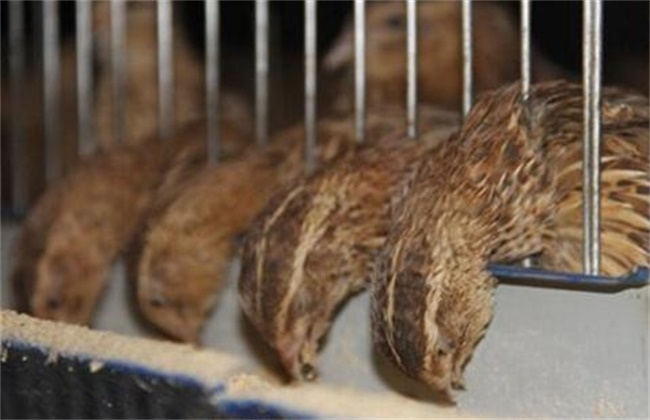
1. Environmental aspects
Quail farming is paying more and more attention to environmental issues, and a good farming environment clearly boosts overall farming returns. Quail are small and extremely susceptible to outside stimuli, especially noise; raising quail in noisy places greatly hurts returns. Quail are raised in fairly dense conditions, so the hygiene risks are relatively large, and the high mortality rate is largely due to this. In addition, changeable weather is also one of the potential risks, which can create difficult management situations. These environmental risks can be said to threaten everyone's returns at any time and need to be prevented as a priority.
2. Technical factors
Don't assume quail seem easy to raise; in fact, their technical requirements are not low at all. Because of their small size, their ability to resist various external risks is extremely poor. This is most likely to cause major losses when feeding and management are not done properly, because when the technical skills are inadequate, farmers often don't even know there is a problem, and only react when the problem becomes serious. Then there is a lack of knowledge about certain things, leading to wrong farming practices and thus major losses. This is the technical risk.
3. Disease factors
No matter what you raise, disease is basically a big problem, and quail farming is no exception. Many quail diseases can very easily appear in batches; some diseases are already quite infectious, and combined with this stocking density, the risk is magnified endlessly. Quail vaccines are incomplete in various respects, and targeted drugs are lacking for many diseases, making medicine hard to find when an outbreak occurs. Also, when many diseases appear, the quail show no obvious signs, which is not helpful for farmers to observe. This is the disease-related risk.
4. Funding issues
As far as farming goes, the startup capital quail need is not as little as everyone thinks. Land, breeding stock, equipment and so on are no small sum, and if you raise too few, you lose money even after raising them. Second, there may also be the cost of restocking chicks several times in between, and even when you finally finish the rearing cycle, whether you can get paid right away is a question. Add to that problems in transport or policy, and you need even more money to fill the gap. The funding is not, as everyone imagines, something you can recoup as soon as the quail are ready for market. These are some of the funding-related issues.
In normal times, this industry does not carry much risk; the main thing is that its uncertainty is too high, and transport in between is also rather troublesome. This is even more obvious in the quail industry, so everyone should be mentally prepared for these risks.