Are Orchids Easy to Grow? Potted Orchid Growing Methods and Precautions
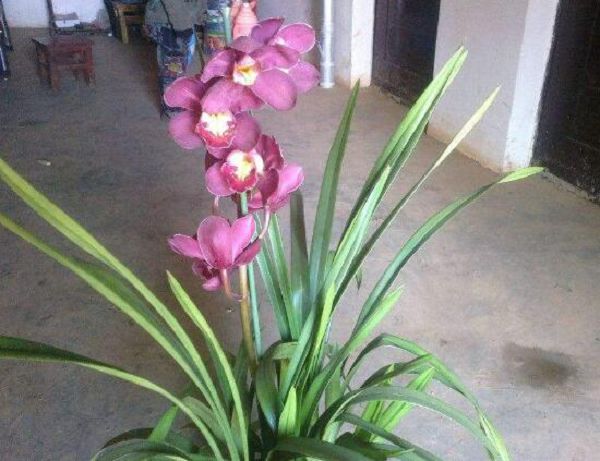
Orchids are highly ornamental plants, and growing them at home can also effectively purify indoor air, which is why they are loved by most people. However, many people want to know whether potted orchids are easy to grow. In fact, growing orchids at home is a fairly simple matter; you just need to first understand the plant's growth habits and then water and fertilize appropriately. Below, let's take a look at the growing methods and precautions for orchids.
I. Are Potted Orchids Easy to Grow?
Orchids are plants from tropical regions and like to grow in warm environments, and they also have fairly strong adaptability, so relatively speaking, orchids are easy plants to grow. If you want to grow orchids well at home, it is best to place them on a balcony or in the living room, because this allows the plant to fully absorb plenty of light and thus promote its growth.
However, in summer the temperature becomes quite hot, so when growing them, flower enthusiasts had best provide the plant with appropriate shading to avoid sunburn, which would affect the plant's ornamental value. Not only that, you should also water and fertilize appropriately, so that the orchid can grow more robustly.
II. Orchid Growing Methods and Precautions
1. Soil Selection
When growing orchids at home, choose the soil it likes; here, humus soil is the main choice. We can buy this kind of soil directly, or cultivate it ourselves. Note that when cultivating it, the soil should have good air permeability, so that it benefits its growth. If you choose soil of poor quality, it will affect the plant's normal growth.
2. Reasonable Light
Orchids like a semi-shaded environment and avoid direct sunlight, especially Cymbidium sinense. When caring for orchids, shading treatment is needed in spring, summer and autumn. You can build a shade shed or place them under the eaves and other cool, ventilated places for care; they can receive scattered light, and the light in the early morning and evening is best. In winter, they can be placed under an indoor windowsill with light, in a place where direct sunlight cannot reach.
3. Appropriate Watering
Before watering, observe whether the orchid pot needs water. Touch the orchid soil with your hand; if it does not stick to your hand, or if the surface of the potting soil turns white, water it promptly. When watering, make sure the entire pot of soil is evenly moistened, ensuring the roots are evenly distributed. You can also use the immersion method, placing the whole pot of Cymbidium ensifolium in water so that water seeps into the pot from the bottom.
4. Fertilization Management
On the basis of mastering watering well, in order to promote better growth of the orchid, fertilization becomes even more important. Organic fertilizer, that is, farmyard manure, should be diluted and can be applied once every ten or so days; other inorganic fertilizers should be used according to the instructions. During the orchid's growing period, foliar fertilizer can be applied as a top dressing outside the roots. So the overall requirement for fertilizing orchids is a small amount, clear and dilute, truly achieving light fertilizer applied frequently.
5. Temperature Requirements
Orchids like a warm environment; generally normal room temperature allows them to thrive, with the temperature controlled at 15 to 25 degrees. In winter, when the temperature is relatively low, move them indoors for care, with the temperature at around 11 degrees, and 5 to 10 degrees at night being suitable. When growing them indoors, pay attention to ventilation and do not let the humidity get too high. In summer, when the temperature is too high, mainly avoid sunburn, and keep the temperature below 28 degrees.