How can you grow Cymbidium tortisepalum var. longibracteatum orchids so they bloom in vivid colors and look enchanting and elegant?
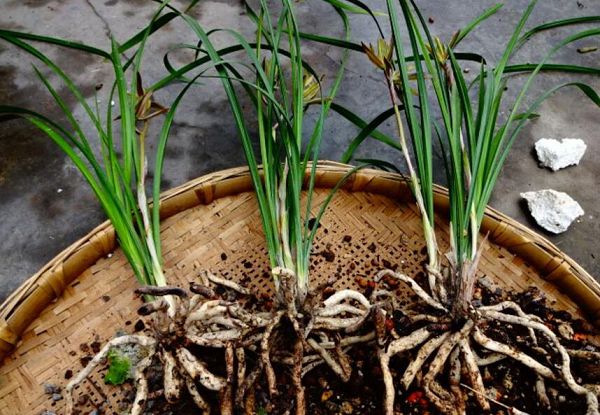
Chunjian is a variety of Cymbidium goeringii. Chunjian has rich and varied flower colors, with gorgeous and colorful pigments, vivid reds and purples, and enchanting elegance. The basic primary colors are: white, green, yellow, red. In Chunjian, there are often holy white tepals, some silvery white, some fish-belly white, some water white, some milky white, some moon white, appearing so sacred, serene, and pure; green tepals, full of vitality, condensing the philosophy of life; yellow tepals, luxurious and bright, the glory of career; red flowers, passionate and affectionate, messengers of love. What are the secrets to making Chunjian Cymbidium goeringii bloom brilliantly? Below, the editor shares with you:
What are the secrets to making Cymbidium tortisepalum var. longibracteatum orchids bloom in vivid colors and look enchanting and elegant?
I. Planting techniques
The suitable temperature for the growth of Chunjian is 18~28°C, not exceeding 35°C in summer, not lower than minus 2°C in winter, and the reproductive growth temperature is 8~18°C. The light condition for Chunjian growth is semi-shade; in winter and spring, light can be appropriately increased to make the flower buds plump and robust. Chunjian's new leaf buds emerge from early May to early June each year, and autumn buds emerge in mid-to-late August. After the new leaf buds emerge, there is a slow growth period of about 20 days; the leaf unfolding period is about late May to late June; June to October is the leaf elongation period; November to February of the following year is the dormant period. Each Chunjian shoot takes about 1 year from emergence to completion of growth. Chunjian is suitable for cultivation in spring, and repotting should be done after flowering. If it is a wild-collected plant, it can be planted before flowering in spring. Before planting, first wash the roots and leaves of Chunjian thoroughly with clean water, then prune off the residual roots and rotten roots cleanly, and also remove all diseased leaves and dried leaves, then soak the root system of Chunjian for a while in diluted potassium permanganate solution, dry it in the shade for one day, and then plant it. Flowers can be seen before long.
II. Watering techniques
Chunjian prefers a relatively moist environment, but this flower fears waterlogging. Watering is best done on sunny days; it is best not to water on rainy days. When watering in winter, be careful not to water thoroughly; just keep the soil slightly moist. Use weakly acidic softened water; do not water flowers directly with tap water. It is recommended to purify it for one or two days before use for irrigation, to eliminate the chlorine in the water. When watering, slowly water thoroughly along the edge of the flower pot; do not pour water directly on the branches and leaves, as accumulated water can easily cause root rot.
III. Fertilization techniques
Chunjian relatively likes fertilizer, and the quality of Chunjian growth is closely related to fertilization. When planting, first spread a layer of base fertilizer at the bottom of the pot. Potted Chunjian that has been given base fertilizer should not be fertilized again that year, otherwise it is easy to have excessive nutrients and burn the root system. For Chunjian fertilization, it is better to apply lightly than heavily, and excessive application is most taboo. For Chunjian in the following year, around flowering and sprouting, 0.1% potassium dihydrogen phosphate can be diluted with water and applied; for weak seedlings, a little nitrogen fertilizer can be appropriately added. It should be noted that fertilization is not suitable when the temperature is too high or too low.
IV. Lighting techniques
Light control is an important aspect of Chunjian care. Too strong or too much sunlight will cause Chunjian leaves to turn yellow or even wither and fall off. If there is too little sunlight, it will slow down the growth of Chunjian, affect the germination of flower buds, and reduce the amount of flowering. Controlling an appropriate amount of sunlight will make Chunjian grow vigorously, germinate more flower buds, and improve flowering quality.
V. Pest and disease control techniques
For Chunjian pests and diseases, it is best to prevent them in advance. Usually pay attention to sterilizing and disinfecting the plants and pots. On sunny mornings at 9 o'clock each month, use 1 vial of streptomycin or chloramphenicol injection, diluted with 3 jin of water, and spray alternately on the leaf surfaces of Chunjian 1~2 times. This can make the leaf surfaces of Chunjian smooth and clean, enhance photosynthesis, improve immunity, and improve the immunity of branches and leaves. If diseased leaves are found, promptly cut off the leaves with disease spots to prevent the spread of the disease.