Detailed Explanation of Key Points in Donkey Feeding and Management Techniques
In the past, donkeys were a type of livestock used specifically for labor in our country, but now with social development, various types of labor are basically replaced by machinery. Therefore, the direction of donkey farming has gradually shifted to meat production. At present, the market demand for donkey meat in our country is still relatively large, and when raising donkeys, we need to do a good job in feeding and management work. So how exactly should it be done? Today, the editor brings you donkey feeding and management techniques, let's take a look together below!
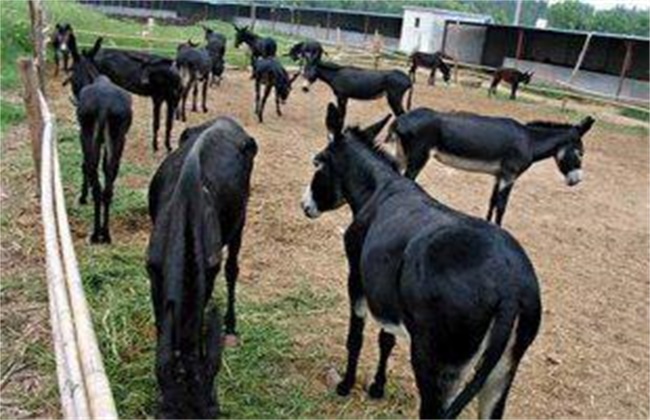
1. Feeding Donkeys
Donkeys are a type of herbivorous livestock. When raising them, the feed is generally based on the straw of grain crops such as corn and rice. When feeding the feed, it must be remembered that the feed cannot be half-dry and half-wet or so tough that it cannot be broken by bending, otherwise it will affect the donkey's digestion. The feed should also be combined with an appropriate amount of concentrated feed such as corn and peas, fed about three times a day, respectively in the morning, noon and evening, mainly with the evening feeding. When feeding, first feed single grass, and after the donkey has eaten enough, then feed some mixed grass. If the donkey shows signs of stopping eating, then feed mixed grass to ensure the donkey's maximum feed intake.
2. Confined Raising of Donkeys
When raising donkeys, the farming method is mainly based on confined raising. Therefore, we must first pay attention to building the donkey pen well. The most basic requirement for the donkey pen is to have wind and rain protection, good warmth retention in winter, and timely ventilation and cooling in summer. Then, feed troughs should be set up properly inside the pen, and it is necessary to ensure that each donkey has sufficient space for activity. Each donkey should have a feeding position of about 70 cm, especially for adult donkeys. Then, according to the distance of the feeding positions, proper fences should be set up to prevent donkeys from fighting over food and fighting each other while eating.
3. Breeding of Donkeys
In the growth of meat donkeys, if you want to ensure the normal and sustainable development of the donkey herd, then breeding work is very important. When breeding, first of all, it is necessary to select good donkey breeds. Breeding donkeys should be guaranteed to be of a breed with a large body size, healthy growth without disease, and strong reproductive capacity. When meat donkeys breed, in many cases, mating within the same breed is the main method. If you want to ensure the reproductive capacity of the donkeys, then artificial insemination can also be mainly used, which can also be beneficial for large-scale breeding of donkeys.
4. Disease Prevention and Control ⟧11⟧Among all livestock, according to their habits, donkeys have a relatively strong ability to tolerate roughage compared with livestock such as cattle and sheep. Therefore, their disease resistance is also very strong. However, if management is improper during breeding, then various diseases are also very likely to occur. The common diseases of donkeys are similar to those of horses and mules, and they are prone to infectious anemia, tetanus and other diseases. For these diseases, prevention is generally the main approach, and management should be strengthened, the growth environment of donkeys should be well controlled, and the incidence of diseases should be reduced.
Among all domestic animals, donkeys have a relatively strong ability to tolerate coarse feed compared with cattle, sheep and other livestock, based on their habits. Therefore, their disease resistance is also very strong. However, if management is improper during breeding, various diseases can easily occur. The common diseases of donkeys are similar to those of horses and mules, and they are prone to infectious anemia, tetanus and other diseases. For these diseases, prevention is generally the priority: management should be strengthened, the donkey's growing environment should be well controlled, and the incidence of disease should be reduced.
The above is a brief introduction to donkey feeding and management techniques. That is all for today's introduction. This article is for reference only, and I hope it can help everyone!