How do you remove dampness from a sheep pen? A few quick tricks to get rid of moisture
Dampness is a fairly common problem for many kinds of livestock, and this is especially true when raising sheep. There are many causes: terrain, weather, environment, improper farming practices and so on can all lead to this problem. So when facing dampness caused by these factors, how should we deal with it?
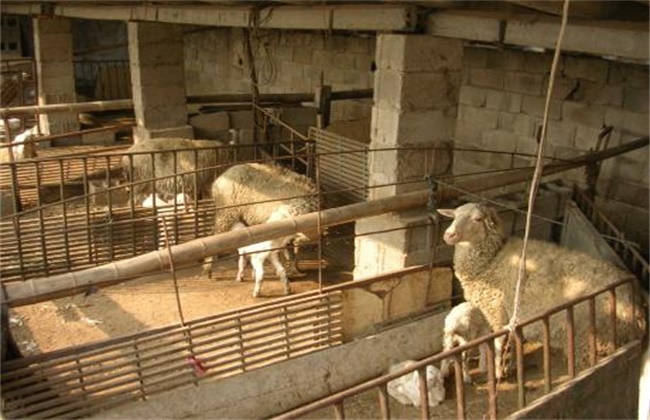
1. Ventilation and air flow
The simplest approach is of course ventilation and air flow. As long as you let the air in the sheep pen circulate, the water vapour will naturally be expelled, and the pen will become much drier. But this also depends on the situation, mainly on how humid it is outside. If it has just rained outside, for example, it is best to seal the sheep pen to prevent water vapour from flowing back in and making the dampness worse. While ventilating, you can check the effect in the pen from time to time; if the moisture clearly has not decreased, it is best to take other measures rather than waste time.
2. Dehumidifier
This method requires a relatively larger investment, but its effect is quite good. It suits sheep pens that stay damp for long periods, because it needs to remove moisture continuously. It works best during the hui nan tian damp season, when water vapour fills the walls of the sheep pen. Pay close attention to where you place it: the expelled moisture must be kept well away from the pen, so that the damp air does not flow back in. You do not need to keep it running every day either; just use it when the sheep pen stays damp, which keeps the cost lower and the effect is still not bad.
3. Lay down moisture-absorbing materials
This method costs relatively little, but it requires more work and a greater amount of labour. Ordinary charcoal, dry grass, wood shavings and similar things are quite effective at absorbing moisture, and in rural areas these are common items that are easy to get hold of. Spread a layer of these materials in the damper parts of the sheep pen, and much of the moisture will be absorbed by them; the effect is especially obvious when you spread them out. This will relieve the dampness in the sheep pen to a great extent, though they will need to be replaced relatively often.
4. Use desiccants
Desiccants are also a fairly common method, simple and effective, and not very expensive, but placement matters a lot and it takes some skill to make the most of them. Some people also use quicklime to remove moisture, but this may generate heat when the dampness is heavy, causing the temperature in the sheep pen to become unbalanced, which is something to watch out for. Some people simply use dry sand as a desiccant, and the effect is good too; the sand here can be reused, so once it gets damp you can haul it out to dry in the sun and then keep using it.
Those are some simple ways to remove dampness from a sheep pen. These methods apply to a wide range of situations, so you can see which one suits you. Dampness in a sheep pen is not ideal for raising sheep, so it is best to solve this problem as early as possible.