How to repot succulents in spring? Methods and precautions
Spring is the vigorous growth period for succulents. Spring temperatures are suitable, making it very ideal for succulent pest control, soil replacement, seedling transplanting, and other tasks, which generally start being done once spring arrives. So how should succulents be cared for in spring? Follow along with the editor below to learn about succulent spring repotting methods and precautions.
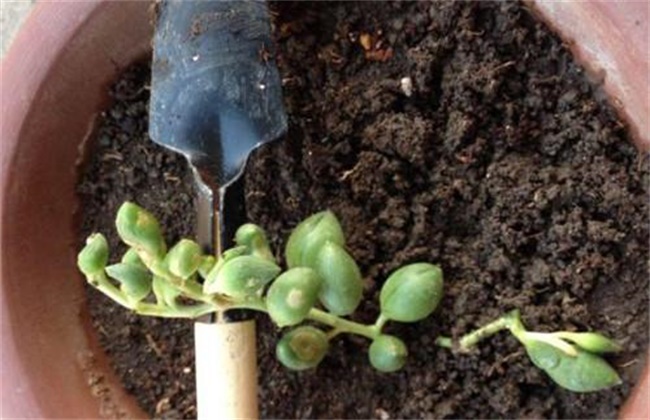
1. Washing the plant
For newly purchased succulents, the soil attached to the root system should be rinsed off, because it may contain a large amount of pathogens and insect eggs. When washing, pay attention to technique and be as gentle as possible. Doing this will inevitably damage the roots to some extent, but root damage should be minimized as much as possible. Generally speaking, place the succulent root system in water and swing it back and forth. Do not rinse with a strong stream of water, as this is very likely to cause the roots to break. Simply shake and rinse repeatedly several times. When white roots are visible, it means the washing is done.
2. Root trimming and disinfection
After washing, root trimming is needed. Generally, blackened roots should be pruned off, as well as dead roots and diseased roots. For overly long roots, they can also be appropriately shortened. In addition, for large numbers of tangled lateral roots, trimming should also be done. The purpose of root trimming is to promote the growth of new fibrous roots, and the newly grown root system will be stronger, making the plant grow more robust. After root trimming, there will definitely be some loss, so a fungicide should be prepared and the plant soaked in the solution for one hour. The fungicide can be chosen from carbendazim, chlorothalonil, thiophanate-methyl, etc., but the concentration should not be too high.
3. Potting
The substrate for planting succulents should be prepared in advance and disinfected. The flower pot should also be sprayed once with fungicide. The flower pot can be chosen according to the succulent variety: a ceramic pot or plastic flower pot, or a porcelain pot, but the bottom of the pot must have holes for drainage. When potting, first put the substrate into the flower pot. The principle is large particles at the bottom layer and small particles at the upper layer, with the particle size of the planting medium gradually decreasing from bottom to top, which facilitates drainage. When covering with soil, use enough to completely cover the roots of the succulent, then gently press the soil surface, and spray a layer of fungicide on top so that the substrate is slightly moist, which helps new roots sprout.
4. Precautions
For newly potted succulents, they should be placed in a location with bright indirect light for care, and should not be directly exposed to strong sunlight. In addition, the environment should be kept well ventilated, and watering should be avoided, so that they can safely pass through the slow seedling period. After one week, resume watering and light exposure and enter the normal care stage. During the slow seedling period, if the potting soil feels relatively dry, you can spray a thin mist of water or fungicide on the soil surface every day. After the slow seedling period, be sure to water decisively, otherwise the succulent may wither, soften, and drop leaves due to lack of water.
The above is an introduction to succulent spring repotting methods and precautions. We hope it helps you. To learn more related knowledge, please stay tuned to us.